
Filmmakers have a toolbox of visual techniques to control how you feel, and one of the most effective is the Dutch angle. By simply tilting the camera, a director can turn a normal scene into one filled with tension, disorientation, or psychological distress. It’s a powerful and sometimes controversial trick that signals to the audience that something is not right in the world of the film.
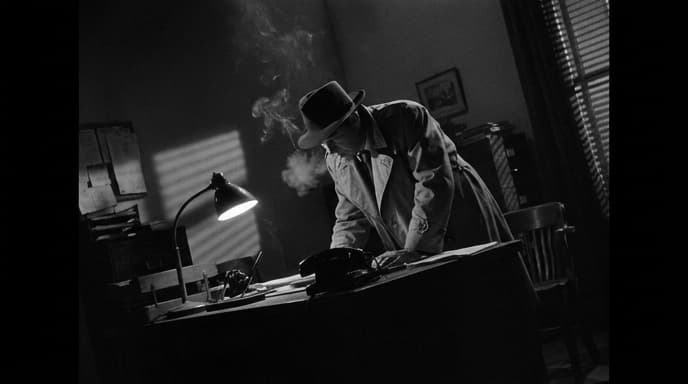
Learning to recognize the Dutch angle, also known as a canted angle, allows you to see the intentional craft behind scenes that feel chaotic or unstable. It’s a deliberate choice to knock you, the viewer, off balance.
The Psychological Impact of a Tilted World
Our brains are wired to recognize horizontal and vertical lines as stable and balanced. The ground is flat, buildings stand upright. When a filmmaker uses a Dutch angle, they disrupt this natural equilibrium. The horizon is skewed, and characters appear to be on unstable ground. This visual dissonance creates an immediate sense of unease.
This technique is often used to:
- Build Tension: In a thriller or horror movie, a tilted frame can heighten anxiety before a scare.
- Show a Character's State of Mind: A Dutch angle can visually represent a character's confusion, madness, or intoxication.
- Create a Sense of Power or Helplessness: Tilting up at a villain can make them seem more menacing, while tilting down on a hero can emphasize their vulnerability.
From Expressionism to Blockbusters: A Quick History
The technique's name is a misinterpretation of 'Deutsch,' meaning German. It gained prominence in the German Expressionist movement of the 1920s. Films like The Cabinet of Dr. Caligari used distorted sets and dramatic, canted angles to create a nightmarish, subjective reality. The style reflected the social anxiety of the time.
This visual language was adopted by Hollywood, particularly in film noir, where it was used to depict moral ambiguity and paranoia. Today, directors like Tim Burton and Sam Raimi use it frequently to establish a stylized, off-kilter tone, while others use it more sparingly for dramatic impact in action sequences or tense confrontations.
How to Spot (and Not Overuse) the Dutch Angle
Once you know what to look for, you'll see the Dutch angle everywhere. Pay attention to the background. Are the lines of doorways, windows, and walls perpendicular to the bottom of the screen? If not, you're likely seeing a Dutch angle. The more extreme the tilt, the more disorienting the effect.
While effective, it's a technique that can easily be overdone. When used without clear purpose, it can feel like a gimmick that distracts from the story. The best uses of the Dutch angle are motivated by the narrative, amplifying the emotion that's already present in the scene.
Frequently Asked Questions
Is a Dutch angle the same as a canted angle?
Yes, the terms are interchangeable. 'Dutch angle' is more common, while 'canted angle' or 'canted framing' are more technical terms.
Why is it called a 'Dutch' angle?
It's a corruption of 'Deutsch angle,' referring to its origins in German Expressionist cinema. It has no connection to the Netherlands.
Can you use a Dutch angle in video games?
Absolutely. Many games use Dutch angles during cutscenes or specific gameplay moments to create the same feelings of tension and disorientation as in film. It's particularly common in the horror genre.
Key Takeaways
- The Dutch angle is a cinematic technique where the camera is tilted to skew the horizontal axis.
- It creates psychological unease, tension, and a sense of imbalance in the viewer.
- The technique originated with German Expressionist filmmakers in the 1920s.
- It is used to reflect a character's state of mind or to make a scene feel dynamic and unstable.
- Effective use of the Dutch angle is motivated by the story; overuse can feel like a cheap trick.
Related Reading
- The Kuleshov Effect: How Film Editing Controls Your Emotions
- How Match Cuts Create Genius Transitions in Film
- Foley Art: The Unseen Craft of Creating a Film's Soundscape