
Fighting games have a reputation for being difficult to learn. With complex button combinations, deep mechanics, and lightning-fast action, they can seem impenetrable to new players. Yet, the genre thrives. The secret is that the best fighting games are expertly designed teaching tools, guiding players toward mastery in ways that go far beyond a simple tutorial mode.
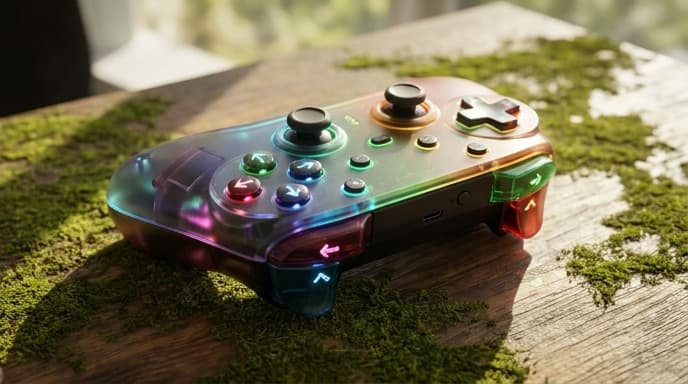
By analyzing character design, move sets, and feedback systems, we can understand how these games create an intuitive learning path. They teach you how to play not by telling you, but by encouraging you to experiment and discover the systems for yourself.
Character Archetypes as a First Lesson
When you first start a fighting game, you're faced with a large roster of characters. Your first choice is your first lesson. Characters are often designed around familiar archetypes that communicate a specific playstyle before you even press a button.
- The All-Rounder ('Shoto'): Characters like Ryu from Street Fighter or Ken from Street Fighter are designed to be balanced and straightforward. They have a projectile for long-range, an anti-air uppercut for defense, and a forward-moving attack. They teach the fundamental pillars of fighting game strategy: space control, defense, and offense.
- The Grappler: Large, slow characters like Zangief are visually intimidating. Their appearance communicates their strategy: get in close to land powerful throws. They teach players about patience and the importance of closing distance.
- The Rushdown: Fast, agile characters with a flurry of attacks teach an aggressive, in-your-face playstyle. They encourage players to learn combos and pressure their opponents.
By picking a character that looks cool or fits a preferred style, the player is unknowingly opting into a specific lesson plan designed by the developers.
Move Sets as Building Blocks
The way special moves are designed is another subtle teaching tool. In many classic fighting games, the inputs for core moves are built on a shared foundation, most famously the 'quarter-circle forward' motion.
This simple, rolling motion of the thumb is relatively easy to learn. Once a player masters it for one move (like Ryu's Hadoken), they have the building block for many others. The Dragon Punch (Shoryuken) is a variation on that motion. This design accomplishes two things:
- It creates a sense of mastery early on. Landing your first special move is a powerful moment of feedback.
- It makes learning new characters easier, as many will share similar input patterns for their core abilities. The player's skills become transferable.
Feedback: The Most Important Teacher
A fighting game is a constant stream of information. Every action has an immediate and clear reaction. This feedback loop is what allows for rapid learning.
- Hit Sparks and Sound: When an attack lands, a bright visual effect and a sharp sound provide instant confirmation. A blocked attack looks and sounds different. This teaches the player to confirm their hits and react accordingly.
- Character Animations: A character's animation clearly shows when they are vulnerable after throwing a big attack (recovery frames) or when they are reeling from a hit (hit stun). Players learn to recognize these states and capitalize on them, teaching the core concept of punishing mistakes.
- The Health Bar: The most obvious form of feedback. It's a clear measure of success or failure, motivating the player to figure out what works and what doesn't.
Through this constant, clear feedback, players learn the rules of engagement through experimentation. Button-mashing slowly gives way to intentionality as the player begins to understand the cause and effect of their actions.
Frequently Asked Questions
Why are fighting game tutorials often so bad?
Historically, many fighting games were designed for the arcade, where the goal was to get players to put in another quarter, not to teach them everything upfront. While modern games have much better tutorial modes, the core philosophy of 'learning by doing' remains central to the genre's design.
What does 'shoto' mean?
'Shoto' is a fan-created term used to describe the archetype of balanced characters in Street Fighter (like Ryu and Ken) who use similar special moves. It has since expanded to describe similar all-rounder characters in other fighting games.
Is button-mashing a valid strategy?
For a beginner playing against another beginner, yes! It's the first step in the learning process. It's how you experiment and see what the buttons do. However, a player who understands the basic mechanics and feedback loops will quickly overcome a pure button-masher.
Key Takeaways
- Fighting games teach through intuitive design rather than just explicit tutorials.
- Character archetypes (All-Rounder, Grappler) guide new players toward a specific playstyle and lesson plan.
- Special move inputs are often based on simple, reusable motions, making skills transferable between characters.
- Clear and immediate feedback from sounds, visuals, and animations is the most critical teaching tool.
- This design philosophy turns the act of playing into a continuous process of discovery and mastery.
Related Reading
- What Is 'Game Feel'? The Invisible Art of Satisfying Gameplay
- Dynamic Difficulty Explained: How Games Adapt to Your Skill Level
- The Psychology of Gacha: How Randomized Rewards Keep Players Engaged