
In a cutscene, your character is a remorseful treasure hunter, lamenting the violence and destruction in their past. A moment later, you, the player, are controlling them as they effortlessly dispatch dozens of enemies to solve a puzzle. The story says one thing, but the gameplay demands another. This conflict is known as ludonarrative dissonance.
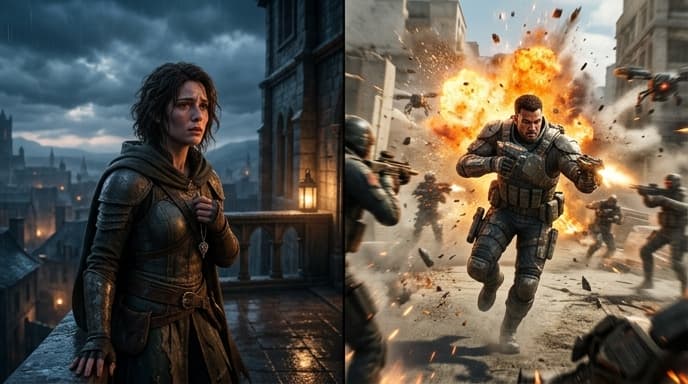
The term combines ludo (from the Latin for 'play') with narrative (story). It describes the jarring feeling players experience when a game's story and gameplay mechanics are at odds. Recognizing this concept gives you a powerful lens for analyzing why some games feel incredibly cohesive while others feel disjointed.
What Causes Ludonarrative Dissonance?
This dissonance often arises when a game's narrative goals clash with its gameplay requirements. A story might aim for emotional depth, moral ambiguity, and character development, while the gameplay loop is built around repetitive, power-fantasy actions like shooting, looting, or leveling up.
Common sources of conflict include:
- Character Inconsistency: A character portrayed as kind and empathetic in the story is forced into violent or selfish actions by the gameplay.
- Thematic Clashes: A game with a narrative about the horrors of war features gameplay that makes combat feel fun, exciting, and rewarding.
- Urgency Mismatch: The story screams that the world is about to end, but the gameplay allows you to ignore the main quest indefinitely to pursue trivial side activities.
Why Dissonance Matters for Players
For many players, ludonarrative dissonance can be a minor issue that is easily ignored. For others, it can be a significant flaw that shatters the suspension of disbelief and breaks their immersion in the game world.
When story and gameplay are in harmony, the experience is amplified. Your actions as a player reinforce the narrative themes and your character's journey. This is called ludonarrative harmony. When they are in conflict, it can make the story feel hollow and the gameplay feel meaningless, pulling you out of the experience and reminding you that you are just playing a game.
How Designers Achieve Harmony
Avoiding dissonance is a major challenge in narrative game design. Designers strive for ludonarrative harmony by ensuring that the player's actions feel consistent with the story being told.
Some effective strategies include:
- Integrating Mechanics and Narrative: Designing gameplay mechanics that directly reflect the character's personality or the story's themes. For example, a game about a fragile character might feature survival and avoidance mechanics rather than direct combat.
- Providing Player Agency: Allowing players to make choices in the gameplay that have a real impact on the narrative, making their actions feel meaningful.
- Justifying Gameplay within the Fiction: Creating a strong in-world reason for the core gameplay loop. If a character can be revived after death, the narrative should account for it.
Frequently Asked Questions
Is ludonarrative dissonance always bad?
Not necessarily. Some designers use it intentionally to make a satirical point or to make the player feel uncomfortable, forcing them to question their own actions within the game. However, in most cases, it is an unintentional byproduct of conflicting design goals.
Can you give a classic example?
A frequently cited example involves games where the story presents the protagonist as a struggling survivor, but the gameplay mechanics allow the player to carry an arsenal of weapons and hundreds of health kits, undermining the narrative's themes of scarcity and vulnerability.
Does this only apply to story-heavy games?
The concept is most relevant to games that have a strong narrative component. In purely abstract or mechanics-focused games (like Tetris or many puzzle games), there is no narrative for the gameplay to conflict with.
Key Takeaways
- Ludonarrative dissonance is the conflict between a game's story (narrative) and its gameplay (ludo).
- It occurs when player actions contradict the character's personality, story themes, or narrative urgency.
- This conflict can break player immersion and weaken the impact of the story.
- The opposite, ludonarrative harmony, is when gameplay and story reinforce one another.
- Designers avoid dissonance by integrating mechanics with narrative and justifying player actions within the game's world.
Related Reading
- How Environmental Storytelling Creates Deeper Game Worlds
- An Introduction to Core Gameplay Loops
- The Importance of Player Agency in Game Design