
Some games just feel good to play. Moving the character, jumping, or interacting with the world is inherently satisfying, even outside of the main objectives. This quality, often called 'game feel' or 'juice,' is the tactile, moment-to-moment experience of control. It's an invisible art that separates good games from great ones.
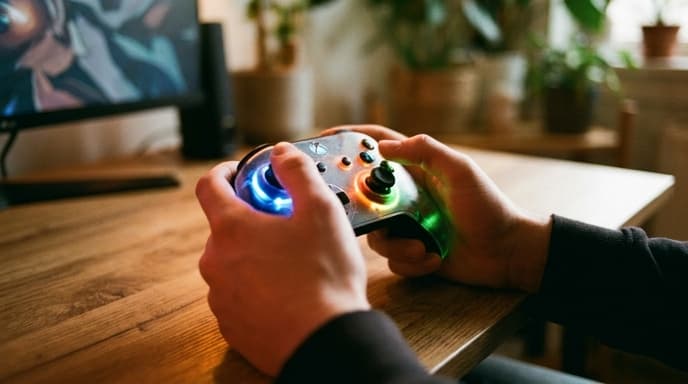
Game feel isn't about graphics or story; it's about the feedback loop between you and the game. When you press a button, how does the game respond? Is the action immediate, clear, and impactful? A game with excellent feel makes you feel powerful and connected to your on-screen avatar.
The Core Components of Game Feel
Game feel isn't a single feature but the result of many small details working together. Most designers agree it boils down to a few key areas that form a cycle: your input, the character's response, and the contextual feedback that makes it all feel real.
1. Input and Responsiveness
This is the foundation. When you press a button, the action should happen on screen almost instantly. Any noticeable delay, or input lag, can make the controls feel sluggish and disconnected. The controls should also be intuitive; the character should do what you expect them to do, without fighting you.
2. Character Response and Animation
How the character moves is critical. Does a jump have a satisfying arc? Is there a slight anticipation animation before a big move, and a recovery animation after? Small details like a character leaning into a turn or stumbling after a long fall make the movement feel weighted and believable. The goal is to create a sense of physicality.
3. Polish and Feedback
This is the 'juice'—the collection of secondary effects that make an action feel impactful. When you land a hit, does the screen shake? Do particles fly off the enemy? Is there a satisfying sound effect and a controller vibration? These layers of feedback confirm your action was successful and make it feel powerful.
Other examples of polish include:
- Coyote Time: Letting the player jump for a few frames after running off a ledge.
- Jump Buffering: Registering a jump press just before the character lands, so they jump again immediately.
- Camera Work: A camera that subtly pulls back to show more of the area or shakes on impact.
Why Game Feel Matters
Excellent game feel creates a state of 'flow,' where the player and the game are in perfect sync. The controller becomes an extension of the player's thoughts. This makes the core gameplay loop enjoyable on its own, which is essential for keeping players engaged for hours.
A game with poor feel, on the other hand, creates constant friction. If you fail a jump because the controls are floaty or you lose a fight because your attacks lack impact, the experience is frustrating. You're no longer fighting the game's challenges; you're fighting the game itself.
FAQ
Is 'game feel' the same as 'gameplay'?
They are related but different. Gameplay refers to the broader set of rules and challenges in a game (e.g., solving puzzles, combat strategy). Game feel is the micro-level, tactile experience of executing the actions that make up that gameplay.
Can a game with a good story have bad game feel?
Absolutely. Many story-driven games have been criticized for clunky controls or unsatisfying mechanics. While a strong narrative can carry a game, poor game feel can still detract from the overall experience by creating moments of frustration.
Is game feel subjective?
To some extent, yes. Some players might prefer heavier, more deliberate controls, while others prefer fast and fluid movement. However, core principles like low input lag and clear feedback are almost universally considered better design.
Key Takeaways
- Game feel is the tactile satisfaction of controlling a game. It's how responsive and impactful your actions feel.
- It's built on three pillars: Instant input, believable character response, and layers of feedback (polish).
- Small details are crucial. Effects like screen shake, particle effects, sound design, and controller vibration add 'juice'.
- Good game feel creates 'flow'. It makes the player feel connected and in control, reducing frustration.
- It is distinct from gameplay, focusing on the execution of actions rather than the rules of the game itself.
Related Reading
- The Invisible Hand: How 'Flow' Guides You Through a Game Level
- The Power of Positive Feedback Loops in Game Design
- How Finite State Machines Power Simple Video Game AI