
In video games, story and gameplay should ideally work together to create a cohesive, immersive experience. But sometimes, what the game tells you and what the game asks you to do are in direct conflict. This tension between the story and the mechanics is known as ludonarrative dissonance.
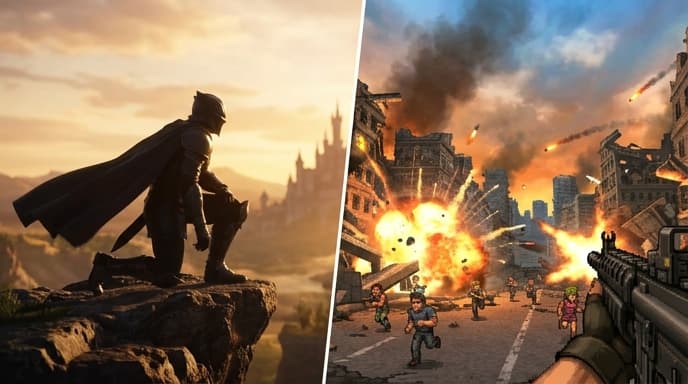
The term combines 'ludo' from the Latin word for play or game, and 'narrative,' which means story. It was coined by game designer Clint Hocking in 2007 to describe a conflict he observed in the game BioShock. Understanding this concept is key to thinking critically about how interactive stories are built—and where they can sometimes fall apart.
The Classic Example: BioShock
In his original analysis, Hocking pointed out a conflict in BioShock. The story, told through audio logs and cutscenes, is a critique of self-interest and a promotion of self-sacrifice. The protagonist is repeatedly encouraged by a character named Atlas to help others for the greater good.
However, the gameplay mechanics are built on harvesting resources and upgrading powers for your own survival and benefit. To get the best upgrades, the player is incentivized to act selfishly. Hocking argued that the game's story was saying one thing, while its systems were rewarding the opposite behavior, creating a dissonance that weakened the game's central theme.
Other Common Examples in Gaming
Once you learn to spot ludonarrative dissonance, you'll see it in many popular games. It often occurs when a game's narrative aims for realism or emotional depth, but its core gameplay loop is built around pure, unadulterated fun.
- The Reluctant Hero: In the Uncharted series, hero Nathan Drake is portrayed in cutscenes as a charming, witty, and generally good-natured everyman. In gameplay, he is an incredibly efficient killer who defeats hundreds of enemies over the course of the game. This disconnect between the character in the story and the actions of the player is a frequently cited example.
- The Urgent Quest: Many open-world games feature a main story with immense urgency—a world-ending threat is imminent! Yet, the gameplay encourages you to ignore that threat for dozens of hours to go fishing, collect trinkets, or complete trivial side quests. The story screams 'Hurry!' while the mechanics whisper 'Take your time.'
Is Ludonarrative Dissonance Always a Problem?
While it can break immersion and undermine a game's themes, ludonarrative dissonance isn't always a fatal flaw. Many players are perfectly capable of separating the story from the gameplay, enjoying each on its own terms. They accept that certain conceits are necessary for a game to be fun.
Some designers argue that a degree of dissonance is inevitable. The primary goal of gameplay is often to empower the player and create an enjoyable challenge, while the primary goal of a story might be to explore vulnerability or complex themes. Sometimes, these two goals are simply not compatible.
However, the best games often find clever ways to create ludonarrative harmony, where the gameplay mechanics reinforce the story's themes. In the horror game Amnesia: The Dark Descent, the character is helpless and terrified. The gameplay reinforces this by giving the player no way to fight back, forcing them to hide and run. The actions you take perfectly align with the story being told.
A Tool for Deeper Analysis
Thinking about ludonarrative dissonance gives you a new lens through which to analyze games. It encourages you to look beyond just 'Is this fun?' and ask deeper questions: What is this game trying to say? What is it asking me to do? And do those two things align?
It's a sign of the maturity of the medium that we can have these discussions. It shows that games are not just collections of fun mechanics but complex works that can be analyzed for their thematic and structural integrity, just like a novel or a film.
Frequently Asked Questions
Who coined the term 'ludonarrative dissonance'?
The term was created by Clint Hocking, a game director and designer, in a 2007 blog post analyzing the game BioShock.
Is this the same as a plot hole?
No. A plot hole is a logical inconsistency within the story itself. Ludonarrative dissonance is a conflict between the story and the interactive systems (the gameplay).
How can designers avoid it?
Designers can avoid dissonance by ensuring the core gameplay loop reinforces the narrative themes. This involves asking what behaviors the game's mechanics are encouraging and making sure they are consistent with the story's message and the protagonist's character.
Key Takeaways
- Ludonarrative dissonance is the conflict between a game's story (narrative) and its gameplay (ludo).
- It occurs when the player is asked to perform actions that contradict the character's personality or the story's themes.
- Classic examples include charming heroes who are mass murderers in gameplay, or urgent quests in open-world games that encourage leisurely exploration.
- While it can break immersion, many players accept it as a necessary part of making a game fun.
- The opposite, ludonarrative harmony, is when gameplay mechanics perfectly reinforce the story's narrative and themes.
Related Reading
- Environmental Storytelling: How Environmental Storytelling Shapes Narrative
- The Three-Act Structure: A Timeless Formula for Storytelling
- What Is 'Game Feel'? The Invisible Art of Satisfying Gameplay