
A growing number of fitness trackers and smartwatches now include a sensor to measure your blood oxygen saturation (SpO2). While it sounds like a complex medical metric, understanding what it represents can offer another layer of insight into your overall wellness, particularly your sleep quality. However, it's vital to know what this data can and, more importantly, cannot tell you.
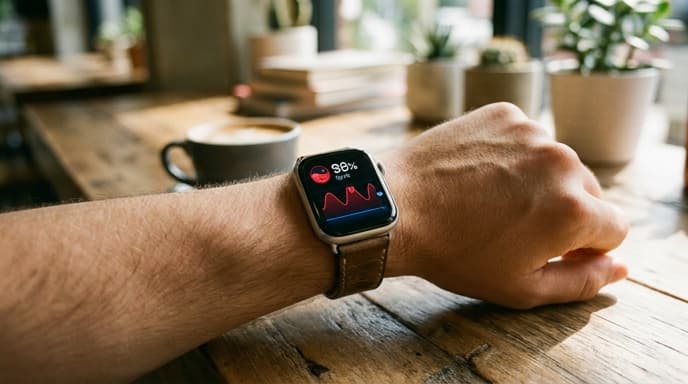
This guide breaks down the science behind SpO2 monitoring. We'll explain how your watch measures it, what typical readings look like, and how you can use this information as a signal for your recovery and adaptation, all while keeping a healthy perspective on its limitations.
What Is Blood Oxygen (SpO2)?
SpO2 stands for peripheral capillary oxygen saturation. It's an estimate of the amount of oxygen-carrying hemoglobin in your blood relative to the amount of hemoglobin not carrying oxygen. In simple terms, it measures how well your circulatory system is delivering oxygen throughout your body.
The measurement is expressed as a percentage. For most healthy individuals, a normal SpO2 level typically ranges from 95% to 100%. This indicates that your red blood cells are effectively saturated with oxygen.
How Do Wearables Measure SpO2?
Your wearable device uses a technology called reflective pulse oximetry. It shines red and infrared light through your skin at your wrist. The relative amount of light that is reflected back to the sensor differs based on the oxygen level of your blood. Hemoglobin that is rich in oxygen absorbs more infrared light, while hemoglobin with less oxygen absorbs more red light. By analyzing this ratio, the device's algorithm can estimate your SpO2 level.
It's crucial to understand that this is an estimate. Factors like skin pigmentation, tattoos, motion, and how tightly the watch is worn can affect accuracy.
What Can SpO2 Data Tell You?
While not a medical diagnostic tool, SpO2 trends from your wearable can provide useful clues in a few specific contexts:
- Sleep Quality: Many devices track SpO2 overnight. Significant or frequent dips in your blood oxygen levels during sleep could indicate breathing disturbances. This doesn't mean you have a condition like sleep apnea, but it could be a signal that your sleep quality is compromised, perhaps due to sleeping position or alcohol consumption.
- Altitude Acclimatization: When you travel to a higher altitude, the air has less oxygen. Your SpO2 levels will naturally be lower as your body adapts. Tracking your SpO2 can help you monitor how well your body is acclimatizing to the new environment.
- Intense Exertion: During maximal-effort exercise, you might see a temporary, slight dip in SpO2. This is generally normal as your body's oxygen demand temporarily outstrips supply.
Important: A wearable SpO2 sensor is for wellness and fitness purposes only. It is not a medical device and should not be used to diagnose or monitor any medical condition.
Frequently Asked Questions
Why are my SpO2 readings low at night?
It's normal for SpO2 to dip slightly during sleep, often to around 95% or a bit lower. Movement during sleep can also cause inaccurate low readings. However, if your device consistently reports significant drops or your average is frequently below 95%, it's a topic worth discussing with a healthcare professional.
Can my smartwatch detect sleep apnea?
No. While it can detect variations in blood oxygen that might be associated with conditions like sleep apnea, it cannot diagnose the condition. A formal diagnosis requires a medical sleep study.
How can I get a more accurate SpO2 reading?
For a spot-check reading, make sure you are still and resting. Your watch should be snug but not too tight on your wrist. Rest your arm on a flat surface, like a table, at heart level and remain still for the duration of the measurement, which is often 15 to 30 seconds.
Key Takeaways
- Blood oxygen (SpO2) measures the percentage of oxygen in your blood, with normal levels for most healthy individuals being 95-100%.
- Wearables use red and infrared light to estimate SpO2 but are not as accurate as medical-grade pulse oximeters.
- SpO2 data can offer insights into sleep quality and altitude acclimatization but should be viewed as a wellness metric, not a diagnostic tool.
- Factors like motion, watch fit, and skin tone can impact the accuracy of readings.
- Never use wearable SpO2 data to self-diagnose. Always consult a doctor with any health concerns.
Related Reading
- A Practical Guide to Your Sleep Stages: Optimizing Deep, Light, and REM Sleep
- What Your Resting Heart Rate (RHR) Reveals About Your Recovery
- Smart Rings vs. Watches: Choosing the Right Wearable for Your Data