
For years, athletes have relied on general guidelines for nutrition—eat carbs before a workout, protein after. But what if you could get personalized, real-time data on how your body responds to specific foods? This is the promise of the Continuous Glucose Monitor (CGM), a wearable sensor that is moving from the world of diabetes management into the toolkit of performance-focused athletes.
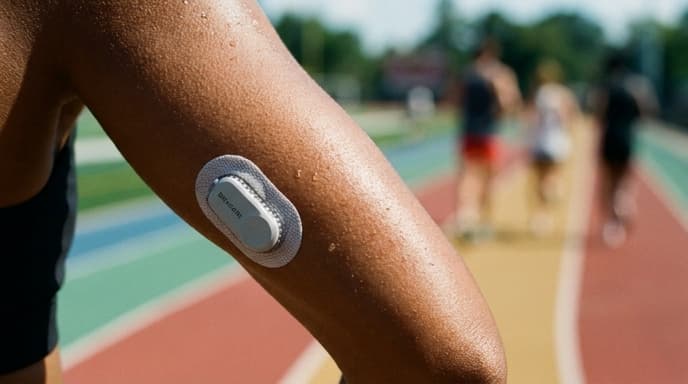
This guide explains what a CGM does and how a non-diabetic individual can use one to learn about their unique metabolism and build a smarter fueling strategy. Disclaimer: A CGM is a medical device. This article is for informational purposes only and is not medical advice. You should always consult with a qualified healthcare professional, such as a doctor or registered dietitian, before using a CGM or making significant changes to your diet.
What Is a Continuous Glucose Monitor?
A CGM is a small wearable device, typically worn on the back of the arm. It has a tiny, flexible filament that painlessly inserts just under the skin to measure the glucose levels in your interstitial fluid (the fluid surrounding your cells). The sensor takes readings every few minutes and sends the data to an app on your smartphone.
This provides a dynamic view of your blood sugar levels throughout the day and night, showing you how they are affected by food, exercise, stress, and sleep. For an athlete, this data can help answer critical questions about their personal fueling needs.
How Athletes Can Use CGM Data
The goal for an athlete is not to eliminate glucose spikes entirely—spikes are necessary to fuel hard work—but to understand and control them. The focus is on maintaining stable energy levels and avoiding performance-killing crashes.
1. Optimizing Pre-Workout Fueling
You can use a CGM to test your pre-workout meals. Eat a specific meal 90-120 minutes before a workout and observe your glucose response. Does it give you a steady rise and stable energy, or a sharp spike followed by a crash (reactive hypoglycemia) right when you're starting your warm-up? By experimenting with different carbohydrate sources (e.g., oatmeal vs. a banana vs. white rice), you can find the exact fuel source that works best for your body.
2. Nailing Intra-Workout Nutrition
During long endurance events, a CGM can help you see if your fueling strategy is working. Are your glucose levels staying stable, or are they trending downward, signaling an impending 'bonk'? This real-time feedback can help you learn precisely when you need to take in a gel or sports drink to maintain performance, rather than just guessing.
3. Speeding Up Post-Workout Recovery
After a hard workout, your muscles are primed to absorb glucose to replenish their glycogen stores. A CGM can help you see how effectively your post-workout meal does this. A robust but controlled glucose spike after training is a good sign that nutrients are getting to your muscles to kick-start the recovery process.
What to Look For in Your Data
As a non-diabetic athlete, you're not looking for the same things as a person managing diabetes. You're looking for patterns related to performance:
- Glycemic Response: How high and how fast does your glucose rise after a meal? Sharper, higher spikes can sometimes lead to subsequent crashes.
- Stability: How much does your glucose fluctuate during the day and during exercise? Less variability often correlates with more stable energy levels.
- Time to Peak: How long after eating does your glucose peak? This can help you time your pre-workout meals perfectly.
Frequently Asked Questions (FAQ)
Do I need a prescription for a CGM?
In many regions, including the United States, CGMs require a prescription. Several companies focused on wellness and athletic performance have emerged that partner with telehealth services to provide prescriptions to non-diabetic users. Do your research on these services before signing up.
Is using a CGM for performance safe?
For a healthy individual without diabetes, wearing a CGM is generally considered safe. However, the primary risk lies in misinterpreting the data and making extreme dietary changes without professional guidance. It is a tool for learning, not for self-diagnosing a medical condition.
What's a 'good' glucose level for an athlete?
There isn't a single number. Healthy, non-diabetic individuals typically have fasting glucose levels in a specific range (e.g., 70-100 mg/dL), but these levels will naturally rise after meals and change during exercise. The goal is not to maintain a flat line, but to understand your personal responses and avoid large, energy-sapping swings.
Key Takeaways
- A CGM is a wearable sensor that provides real-time data on your blood glucose levels.
- Athletes can use this data to personalize their nutrition, finding the best foods for pre-workout fuel and post-workout recovery.
- The goal is to promote stable energy by understanding your unique response to different foods, not to eliminate glucose spikes.
- A CGM is a medical device; always consult with a doctor or registered dietitian before using one and when interpreting your data.
- This is an advanced tool for dedicated athletes looking to fine-tune a final layer of their performance.
Related Reading
- Batch-Cooked Steel-Cut Oats for a Week of Pre-Workout Fuel
- A Post-Workout Checklist: 5 Steps to Accelerate Your Recovery
- How Your Fitness Tracker Estimates Calorie Burn (and Why It’s Just an Estimate)