
Your fitness tracker probably shows you a Heart Rate Variability (HRV) score every morning. It might be presented as a single number or a graph, but its purpose is simple: to give you a snapshot of your body's recovery status. Understanding what HRV is and how to use it can transform your approach to training, helping you decide when to push hard and when to prioritize rest.
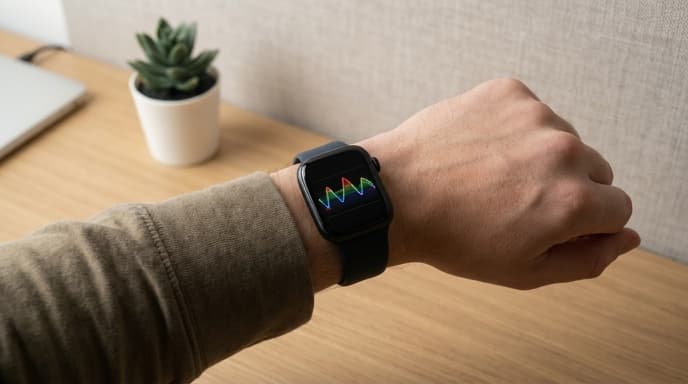
This guide breaks down what heart rate variability actually measures, what makes it go up or down, and how to use its long-term trend to build a more effective and sustainable training plan. It's about learning to listen to your body's data.
What Is Heart Rate Variability?
Heart Rate Variability isn't about how fast your heart is beating, but how consistent the timing is between beats. If your heart rate is 60 beats per minute, it doesn't mean it beats exactly once every second. There are tiny, millisecond-level variations in the intervals between each beat. HRV is the measurement of these variations.
These fluctuations are controlled by your autonomic nervous system (ANS), which has two branches:
- Sympathetic (Fight-or-Flight): This branch prepares you for action. It increases your heart rate and makes the beat-to-beat interval more regular, leading to a lower HRV.
- Parasympathetic (Rest-and-Digest): This branch helps you relax and recover. It allows for more variation in the beat-to-beat interval, leading to a higher HRV.
A higher HRV is generally seen as an indicator that your body is relaxed, recovered, and ready for stress (like a hard workout). A lower HRV suggests your body is under strain from things like intense training, poor sleep, illness, or mental stress.
How to Interpret Your HRV Data
The single most important rule of using HRV is to focus on the trend, not the daily number. A single low score isn't a reason to panic or skip a workout. Your HRV can be affected by dozens of factors, from a late meal to a stressful work meeting. Look for patterns over several days or weeks.
Most wearables will establish a baseline for you after a few weeks of consistent use. A downward trend over several days is a clear signal that your cumulative stress is high and you may need more recovery. An upward trend or a stable HRV within your normal range suggests you are adapting well to your training load.
Common Factors That Influence HRV:
- Training Intensity: A hard workout will temporarily lower your HRV. It should rebound with proper recovery.
- Sleep Quality: Poor or insufficient sleep is one of the biggest factors that can suppress HRV.
- Alcohol: Even one drink can significantly lower your HRV score overnight.
- Mental Stress: Deadlines at work, personal anxiety, and travel can all impact your ANS and lower HRV.
- Illness: A sudden, sharp drop in HRV is often one of the first signs of your body fighting off an illness.
A Simple Protocol for Using HRV in Your Training
You can use your HRV trend as a simple traffic light system for your training decisions. After establishing your baseline (typically a 1-2 week moving average), compare your daily or 3-day average to it.
- Green Light (HRV within or above baseline): Your body is recovered and ready for stress. This is a good day to tackle a high-intensity workout or push for a personal best.
- Yellow Light (HRV slightly below baseline): You may be carrying some fatigue. Consider sticking to a planned workout but don't push for maximum intensity. You could also opt for a lower-intensity session or active recovery.
- Red Light (HRV significantly below baseline for 2-3 days): This is a strong signal that your body is under significant stress. This is the time to prioritize recovery. A rest day, a light walk, or mobility work is a much better choice than a hard workout, which could dig you into a deeper recovery hole.
Frequently Asked Questions (FAQ)
What is a good HRV score?
There is no universal “good” HRV score. It is highly individual and depends on age, gender, genetics, and fitness level. The most important thing is to compare your daily score to your own personal baseline and trends, not to others.
How can I improve my HRV?
Improving your HRV is about managing overall stress. Key habits include consistent, high-quality sleep, proper hydration, a balanced diet, stress-management techniques like meditation or breathwork, and balancing your training load with adequate recovery.
Why did my HRV drop after an easy workout?
A single workout is just one of many stressors. Your HRV could be low due to other factors like poor sleep, work stress, or diet. Look at the bigger picture and the multi-day trend before drawing conclusions about a specific workout.
Key Takeaways
- Heart Rate Variability (HRV) measures the variation in time between your heartbeats, reflecting the state of your autonomic nervous system.
- A higher HRV generally indicates good recovery, while a lower HRV suggests your body is under stress.
- Focus on your long-term HRV trend and baseline, not on a single day's reading.
- Factors like sleep, alcohol, mental stress, and illness have a significant impact on your HRV.
- Use an HRV-based traffic light system (green, yellow, red) to make smarter daily decisions about training intensity.
Related Reading
- What Your Resting Heart Rate (RHR) Reveals About Your Recovery
- A Practical Guide to Autoregulation in Your Training
- How to Structure a Deload Week for Maximum Recovery