
Your fitness tracker is likely collecting data you don't even look at, and one of the most insightful of these newer metrics is skin temperature. Measured overnight while you sleep, the subtle shifts in your skin's temperature can be a powerful leading indicator of your body's internal state, signaling everything from recovery needs to the onset of illness.
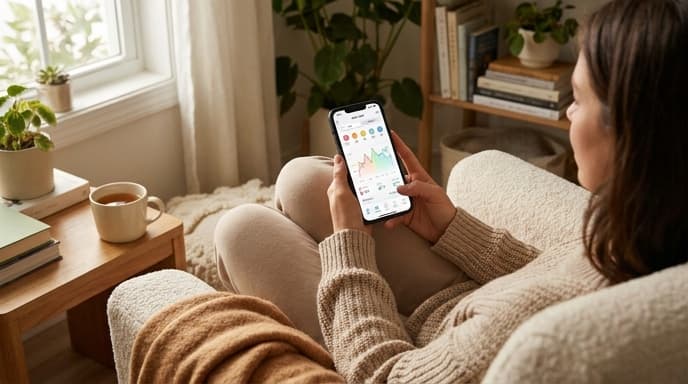
This guide will teach you how to interpret this data. We'll explain what your wearable is actually measuring, why the trend is more important than the number itself, and how you can use these insights to be more proactive about your health and training.
Skin Temperature vs. Core Temperature
The first thing to understand is that the temperature on your wrist or finger is not the same as your core body temperature, which you'd measure with an oral or ear thermometer. Skin temperature is naturally more variable and is influenced by your environment (like the temperature of your room) and your body's own regulatory processes.
For this reason, wearables don't show you an absolute temperature. Instead, they track your temperature variation relative to your personal baseline. They show you whether you were, for example, +0.3°C or -0.2°F compared to your average. It is this deviation from the norm that holds the valuable information.
How to Interpret Skin Temperature Trends
After establishing a baseline over a couple of weeks, you can start to read the signals from your nightly temperature data. The key is to look for significant changes from your established pattern.
- An Elevated Temperature: A significant increase in skin temperature above your baseline is often a sign that your body is fighting something. It can be one of the earliest indicators that your immune system is activated, sometimes appearing a day or two before you consciously feel sick. It can also be elevated due to intense training, alcohol consumption, or high levels of stress.
- A Stable Temperature: When your skin temperature stays within your normal range, it generally suggests your body is in a state of balance, or homeostasis. This is a good sign that you are recovering well and are not under significant physiological stress.
Skin Temperature and the Menstrual Cycle
For women, skin temperature can be a particularly useful metric for tracking the menstrual cycle. There is a distinct biphasic pattern to temperature across the cycle:
- Follicular Phase (First Half): From menstruation to ovulation, body temperature is typically lower.
- Luteal Phase (Second Half): After ovulation, the release of the hormone progesterone causes a sustained increase in baseline body temperature, which lasts until the next period begins.
By observing this shift, users can gain a better understanding of their cycle phases, which can be valuable for both health monitoring and athletic training adaptations.
Frequently Asked Questions
Can I use my watch to check if I have a fever?
No. Wearable skin temperature sensors are not medical devices and cannot diagnose a fever. A fever is defined by a specific core body temperature, which must be measured with a clinical thermometer. Use your wearable data as a clue that you might want to check your temperature with a proper thermometer.
What else can cause my skin temperature to rise?
Besides illness or hormonal changes, other factors can cause a temporary spike. These include drinking alcohol, eating a large meal late at night, sleeping in a much warmer room than usual, or even a significant sunburn. Context is always key when interpreting your data.
Why does my wearable only measure temperature at night?
Measuring during sleep provides the most stable and controlled condition. During the day, your skin temperature fluctuates constantly due to activity, ambient temperature, and even what you're eating or drinking, making the data too 'noisy' to be useful for baseline tracking.
Key Takeaways
- Wearables measure skin temperature variation from your personal baseline, not your absolute core body temperature.
- A significant increase in your nightly skin temperature can be an early indicator of immune system activation, stress, or over-exertion.
- Stable skin temperature trends suggest your body is in a state of balance and recovering well.
- Skin temperature data can be a useful tool for tracking the phases of the menstrual cycle due to hormonal shifts.
- Always use a clinical thermometer to confirm a fever and consult a healthcare professional for any medical concerns.
Related Reading
- Readiness Scores Explained: The Science Behind Whoop and Oura's Daily Numbers
- What Your Resting Heart Rate (RHR) Reveals About Your Recovery
- A Practical Guide to Your Sleep Stages: Optimizing Deep, Light, and REM Sleep