
You close your eyes, and wake up hours later. But what happens in between is a complex, dynamic process. Your fitness tracker presents this nightly journey as a chart of sleep stages: light, deep, and REM. Understanding what these stages are and what they do is crucial for anyone serious about performance and recovery.
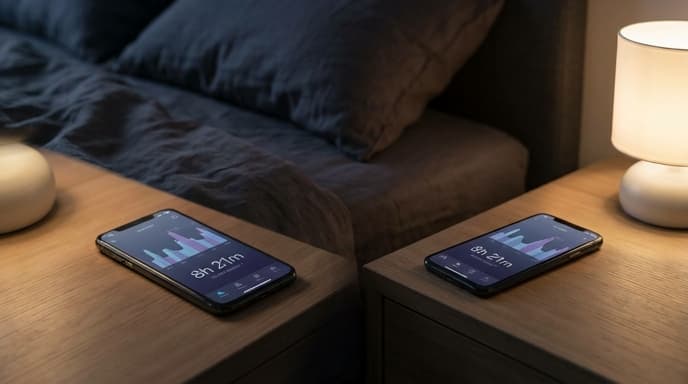
This guide demystifies your sleep data. We'll explore the distinct role each stage plays in making you faster, stronger, and smarter, and provide practical, science-backed strategies you can implement tonight to improve your sleep architecture.
Light Sleep: The Gateway to Rest
Light sleep typically makes up the largest portion of your total sleep time, around 50%. During this stage, your muscles relax, your heart rate and breathing slow down, and your body temperature drops. It's the transition period into deeper sleep stages.
While it might sound less important, light sleep is vital. It's where your body begins the process of physical restoration. It's also the stage you're most easily woken from. Think of it as the necessary foundation for the more intensive recovery work that happens later.
Deep Sleep: The Body's Repair Crew
Often called slow-wave sleep, deep sleep is the most physically restorative stage. This is when your body gets to work on repair and growth. Your heart rate and breathing are at their lowest, and it's very difficult to be awakened.
During deep sleep, your body:
- Releases growth hormone to repair muscles and tissues.
- Clears metabolic waste from the brain.
- Strengthens the immune system.
- Consolidates certain types of memory.
For athletes, getting enough deep sleep is non-negotiable for recovering from training. Most adults should aim for deep sleep to be about 15-25% of their total sleep time.
REM Sleep: The Mind's Filing System
Rapid Eye Movement (REM) sleep is when your brain is highly active—sometimes even more so than when you're awake. This is the stage where most vivid dreaming occurs. Your body, however, is essentially paralyzed (a state called atonia), which prevents you from acting out your dreams.
REM sleep is critical for mental restoration. During this phase, your brain:
- Consolidates memories and skills learned during the day.
- Processes emotions and social interactions.
- Supports creativity and problem-solving.
REM sleep typically occurs in longer periods during the second half of the night. It usually makes up about 20-25% of total sleep for adults.
How to Improve Your Sleep Stages
You can't directly control which sleep stage you're in, but you can create the right conditions for your body to cycle through them effectively. Here are some targeted strategies:
- For Better Deep Sleep: Focus on consistency. Go to bed and wake up at the same time every day, even on weekends. Avoid large meals, intense exercise, and bright lights in the 2-3 hours before bed. A cool, dark, and quiet room is essential.
- For More REM Sleep: Minimize stress and alcohol. Alcohol, especially close to bedtime, is known to suppress REM sleep. Practice relaxing activities before bed, like reading, meditation, or light stretching, to calm your mind.
Frequently Asked Questions
Is it better to get more deep sleep or REM sleep?
Both are critically important, and they serve different functions. Deep sleep is primarily for physical restoration, while REM sleep is for mental restoration. A healthy night's sleep contains a balanced proportion of all stages, and your body naturally regulates this.
Why does my wearable show I get very little deep sleep?
Wearable sleep tracking is based on algorithms that use motion and heart rate data, so it's an estimation, not a medical-grade measurement. However, consistently low deep sleep readings could point to issues like alcohol consumption before bed, a warm bedroom, or late-night exercise.
Do I need less sleep as I get older?
While sleep patterns can change with age, the need for adequate sleep doesn't diminish. Older adults may experience a natural decrease in deep sleep, making good sleep hygiene even more important to maximize the quality of the sleep they do get.
Key Takeaways
- Your night is divided into three main sleep stages: light, deep, and REM, each with a unique restorative function.
- Light sleep is the entry point for rest and makes up the majority of your sleep time.
- Deep sleep is for physical repair, muscle growth, and immune function. Prioritize it after hard training days.
- REM sleep is for mental processing, memory consolidation, and emotional regulation.
- Improve sleep quality by maintaining a consistent schedule, creating a cool and dark environment, and avoiding alcohol and stress before bed.
Related Reading
- What Your Resting Heart Rate (RHR) Reveals About Your Recovery
- How to Use Advanced Sleep Metrics to Structure Your Training
- A Practical Guide to Cold Water Immersion for Recovery