
A negative checking balance needs immediate attention. Leaving it alone can trigger non-sufficient funds (NSF) charges, returned check fees, and automated transfers that drain your next direct deposit. An overdraft recovery routine limits the damage quickly.
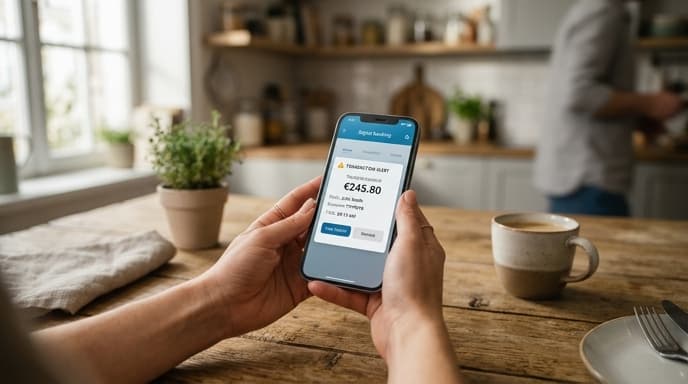
Most overdrafts happen because of timing: a bill processes a few hours before a paycheck arrives, or an annual renewal drafts unnoticed. Here is how to stop the fees and stabilize the account.
Immediate Triage: The First 24 Hours
As soon as you see a negative balance, stop more money from leaving the account:
- Halt recurring payments: Pause upcoming automatic withdrawals scheduled for the next two or three days through your billers' portals.
- Turn off debit card overdraft coverage: Banks cannot charge fees for overdrafts on everyday debit card purchases or ATM withdrawals unless you opted in. Turn this setting off so transactions decline at checkout instead of charging a fee.
- Transfer emergency cash: If you have money in a linked savings account, move just enough to bring your checking balance back above zero.
Securing an Overdraft Fee Waiver
Banks often waive overdraft fees for customers who ask, especially if it does not happen regularly.
Call customer service and use a simple script:
"Hello, I noticed an overdraft fee assessed on my account following an unexpected automated charge. I have brought my account balance back into positive standing today. Given my account history, I would appreciate a courtesy waiver of this fee."
If the first representative says no, ask for a supervisor. Emphasize that the balance is positive again. Many banks allow staff to waive one or two fees each year.
Disentangling the Payroll Depletion Loop
The main risk of an overdraft is what happens on payday. If your account is negative $300 and a $1,500 deposit arrives, the bank keeps $300. You now have $1,200 to cover two weeks of expenses that usually require $1,500, which can easily trigger another overdraft before the next check.
To stop this cycle, temporarily cut back on spending. Pause non-essential purchases, cook meals with food you already have, and delay bills that offer grace periods without penalties until your balance stabilizes.
Roleplaying the Waiver Request with an LLM
You can run through a practice call with an AI assistant to prepare your questions and responses. Keep your private account details out of the chat.
Prompt example: "Act as a retail bank customer service supervisor. I am a customer calling to request a waiver for a $35 overdraft fee caused by an unexpected utility auto-draft. My account is back in the positive. Simulate the phone call, test my reasoning, and guide me on how to remain polite, assertive, and persuasive." Running through the conversation helps you stay calm and clear when you make the actual call.
Frequently Asked Questions
How long can a checking account remain negative before it is closed?
Banks typically close and charge off negative accounts after 30 to 60 days, reporting the balance to agencies like ChexSystems. Extended overdraft fees can start after five business days.
What is the difference between an NSF fee and an overdraft fee?
An overdraft fee occurs when the bank pays the transaction for you and leaves your balance negative. An NSF fee occurs when the bank rejects the payment, returns it unpaid, and charges you for the failure.
Can a negative checking account ruin my credit score?
Overdrafts do not appear on credit reports right away. If the account stays negative and the bank sells the debt to a collections agency, that collection will show up on your credit file.
Key Takeaways
- Opt out of debit card overdraft coverage so purchases decline instead of incurring fees.
- Call customer service to request a courtesy waiver once your balance is positive.
- Pause pending automatic bill payments to avoid multiple fees.
- Cut discretionary spending for a cycle to keep your next paycheck from falling short.
- Practice fee requests beforehand to communicate clearly with the bank.
Related Reading
- The Two-Pot Paycheck Routing Architecture for Cash Flow Control
- The $1,000 Starter Buffer: Bridging Paychecks Without Credit Cards
- Decoding Bank Checking Account Fee Schedules with an LLM Assistant