
Groceries are often the most variable expense in a household budget. Unlike rent or car payments, supermarket spending changes from week to week and easily creeps up with impulse additions. The grocery budget bridge routine controls this spending through pantry checks and unit-price comparisons.
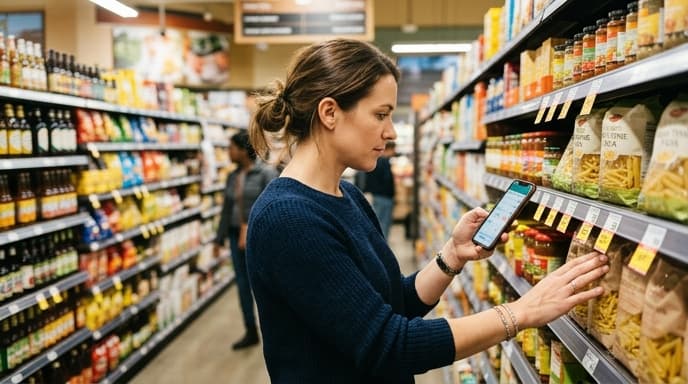
Instead of relying on willpower in the store aisles, this method changes how you make your shopping list. Checking what you already have helps you avoid buying duplicate items and throwing away spoiled food.
The Anatomy of Supermarket Budget Creep
Grocery bills usually run high for three simple reasons:
- Shopping without checking supplies: Buying staples you already have because they were hidden in the back of the pantry.
- Ignoring unit pricing: Choosing a product with a lower sticker price even though it costs significantly more per ounce.
- Taking mid-week fill-in trips: Stopping at the store for one item and leaving with extra snacks and drinks.
The Reverse Pantry Audit Protocol
A reverse audit starts with what you already have rather than what you feel like eating:
- Check perishables: Make a list of vegetables, dairy, and meat that will expire within the week.
- Check dry staples: Look over grains, pasta, beans, and canned goods in your cupboards.
- Plan meals around existing food: Design several meals around these ingredients, buying only the fresh items needed to finish them.
- Stick to the missing items: Go to the store with a list limited to the missing ingredients for those specific meals.
Mastering Unit Price Calculations
Shelf tags usually show two figures: the total price and the unit price (the cost per ounce, pound, or count). Packages on sale can sometimes have a higher unit cost than standard, unpromoted items.
Use this basic formula:
Unit Price = Total Package Price / Total Units (ounces, grams, or count)
For example, a 16-ounce container of yogurt at $2.40 is $0.15 per ounce. A 32-ounce container at $4.16 is $0.13 per ounce. The larger container is cheaper per ounce only if you eat all of it before it spoils. If a quarter of it gets thrown away, the real cost rises to $0.17 per ounce, erasing the savings.
Prompting an LLM as a Pantry Inventory Chef
Language models can quickly suggest meals from whatever you have in the fridge. This makes it easy to build a weekly plan without buying a full cart of groceries.
Prompt example: "I have the following ingredients in my kitchen that need to be used this week: 1 block of tofu, half a bag of carrots, dry brown rice, 1 can of black beans, and soy sauce. Give me three simple dinner recipes I can cook using only these items plus basic cooking oil and salt. List any single missing ingredient that would tie them together at low cost."
Frequently Asked Questions
Is buying in bulk always cheaper?
No. Buying in bulk only saves money on non-perishable goods or food you eat regularly. If bulk produce or dairy spoils before you finish it, the price per meal goes up.
How do I stop mid-week emergency takeout spending?
Keep a few simple, shelf-stable meals or frozen options at home, such as frozen dumplings or pasta with jarred sauce. Having an easy backup keeps you from ordering delivery when you are tired.
Do store loyalty programs actually save money?
Loyalty programs lower prices on standard household staples, but digital coupons often promote snacks and processed foods you would not otherwise buy.
Key Takeaways
- Plan weekly dinners around perishables you already have at home.
- Compare items using the unit price instead of the sticker price.
- Factor in potential waste before choosing bulk sizes over smaller packages.
- Limit quick mid-week store visits to avoid impulse purchases.
- Use an AI model to turn leftover ingredients into simple meal ideas.
Related Reading
- How to Run a Weekly Spending Velocity Check Using an LLM
- How to Build a Bare-Bones Survival Budget for Income Disruptions
- The Discretionary Spending Cool-Down Routine: How to Break Impulse Buying Loops