
Food spending is among the most variable lines in household cash flow. Because supermarkets carry both nutritional staples and higher-margin prepared foods, utility and impulse spending regularly overlap. Without a structured limit, monthly grocery costs fluctuate and pull funds from broader savings plans.
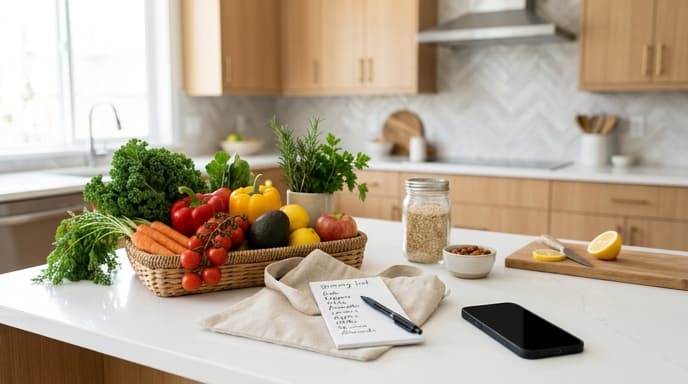
Applying a meal-cost ceiling provides stability. Calculating a target cost per portion and using conversational AI to plan meals around existing pantry stock controls food expenditures through changing grocery prices.
Defining the Cost-Per-Plate Ceiling Metric
Broad monthly targets like $600 or $800 often fail to prevent overspending because they provide little guidance when selecting individual items in an aisle.
A cost-per-plate ceiling turns monthly goals into per-meal limits. For a two-person household with a $600 monthly budget allocated across 60 dinners (with breakfast and lunch covered by separate low-cost staples), the maximum target is $5.00 per plate, or $10.00 per meal.
Under this approach, higher-cost items must be paired with low-cost ingredients—such as rice, lentils, eggs, oats, or seasonal produce—to maintain the combined meal average below the target limit.
Conducting a Pantry and Protein Audit
Before purchasing new groceries, check existing stock. Most households maintain $50 to $150 in shelf-stable dry goods, canned goods, and frozen items that are overlooked while fresh groceries spoil.
- Audit foundational carbohydrates: Count estimated portions of stored rice, grains, pasta, oats, and potatoes.
- Log core proteins: Record freezer contents (poultry, ground meat, fish) and canned beans or legumes.
- Identify seasoning infrastructure: Oils, vinegars, dried herbs, and spices have low per-serving costs and turn basic staples into varied meals.
Structured Prompts for Inventory-Driven Meal Construction
You can use an LLM to build meals around existing stock. Instead of searching recipe collections that require new ingredients, prompt the model to assemble meals using only what is on hand while staying within your cost targets.
Use an input template like this: 'Here is a list of my current pantry and freezer staples: [insert 8-10 ingredients]. Generate four distinct dinner concepts for two people using exclusively these items plus basic kitchen spices. Do not include any recipes requiring fresh purchases. For each meal, outline the portion sizes to ensure each plate provides balanced protein and fiber.'
Restricting the model to current inventory prevents adding ingredients that lead to unplanned purchases.
Enforcing Store Floor Constraints
When replenishing fresh groceries, apply these three practices to manage spending:
- Use unit-price sorting: Compare shelf-tag unit costs (price per ounce or pound) rather than total package costs to identify packaging reductions that mask price increases.
- Switch to online curbside pickup: Ordering through a store app limits impulse buying and displays the total cart cost prior to checkout. If the order exceeds your budget, remove non-essential items before paying.
- Establish a single replenishment day: Consolidate grocery trips into one run per week. Frequent midweek trips to buy a single ingredient often lead to unintended purchases.
Frequently Asked Questions
How do you account for basic spices and cooking oil in per-meal calculations?
Treat bulk cooking oils, salt, and spices as fixed monthly overhead (a flat $10 to $15 budget line) rather than calculating minor ingredient costs per plate.
What if dietary restrictions make low-cost staples difficult to use?
The cost-per-plate approach works with different ingredients. Identify the baseline prices for suitable staples (such as potatoes or specific legumes), adjust the per-plate target accordingly, and offset the difference in other discretionary budget categories.
How does curbside pickup save money if there is a fulfillment fee?
Many grocers waive pickup fees above order minimums (such as $35). Even with a small fee, avoiding impulse purchases and monitoring the cart total before checkout generally offsets the expense.
Key Takeaways
- Set a cost-per-plate ceiling rather than relying solely on a total monthly grocery budget.
- Audit pantry and freezer inventory before shopping to use existing food supplies.
- Prompt conversational LLMs to generate recipes solely from on-hand inventory.
- Check unit prices on shelf tags to identify package downsizing and price increases.
- Use a single weekly pickup order to avoid impulse purchases in store aisles.
Related Reading
- How to Run a Mid-Month Cash Flow Triage When Spending Runs Hot
- How to Build a Bare-Bones Survival Budget for Income Disruptions
- How to Stress-Test Your Monthly Budget Using Structured LLM Prompts