
After a demanding training session, your body needs nutrients to repair and rebuild. The last thing you want is a complicated cooking process with a mountain of dishes. Enter the foil pack: a self-contained cooking method that steams your food to perfection while locking in flavor and nutrients.
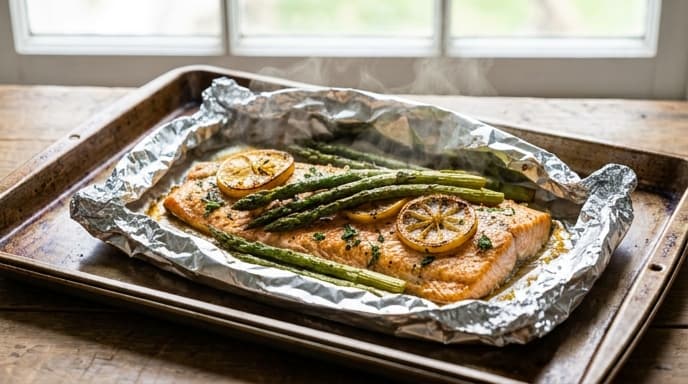
This baked salmon and asparagus recipe is the ultimate recovery meal. It's fast, requires minimal prep, and the cleanup is as simple as throwing away a piece of foil. You get a perfectly portioned meal packed with high-quality protein and healthy fats.
The Nutritional Power of Salmon and Asparagus
This isn't just a convenient meal; it's a strategic one. Salmon is an excellent source of lean protein, which is crucial for muscle repair. It's also rich in omega-3 fatty acids, which can play a role in managing inflammation. Asparagus provides essential vitamins and fiber, rounding out the meal without adding heavy carbs.
How to Make Salmon & Asparagus Foil Packs
This recipe is for a single serving but can be easily scaled up by making more individual packs. Cook them all on the same baking sheet.
Estimated Macros Per Pack: 420 calories, 40g protein, 8g carbohydrates, 25g fat.
Ingredients:
- 1 (6-ounce) salmon fillet, skin off or on
- 1/2 bunch of asparagus, tough ends trimmed
- 1 tbsp olive oil
- 2 lemon slices, plus extra for serving
- 1 clove garlic, minced
- Salt and black pepper to taste
- Optional: 1 tsp dried dill or fresh parsley
Method:
- Preheat your oven to 400°F (200°C). Tear off a sheet of heavy-duty aluminum foil, about 12-15 inches long.
- Prepare the vegetables. Place the trimmed asparagus in the center of the foil sheet. Drizzle with half of the olive oil, sprinkle with salt and pepper, and toss to coat. Arrange them in a flat layer.
- Add the salmon. Pat the salmon fillet dry with a paper towel and place it on top of the asparagus.
- Season the salmon. Drizzle the remaining olive oil over the fish. Rub the minced garlic over the top and season generously with salt, pepper, and dill if using. Place the lemon slices on top of the fillet.
- Create the pack. Bring the long sides of the foil together and fold them over several times to create a tight seal. Then, fold in the shorter sides to completely enclose the food. This traps the steam, which cooks the food.
- Bake. Place the foil pack on a baking sheet and bake for 15-20 minutes. The exact time will depend on the thickness of your salmon fillet. The fish is done when it flakes easily with a fork.
- Serve. Carefully open the foil pack, as hot steam will escape. Serve immediately, perhaps with a side of quinoa or brown rice.
Frequently Asked Questions
Can I use other vegetables?
Absolutely. Zucchini, bell peppers, cherry tomatoes, and green beans are all great options. Just be sure to cut them into similar-sized pieces for even cooking.
Can I grill these foil packs?
Yes, this method works perfectly on a grill. Place the packs on a preheated grill over medium heat and cook for about 10-15 minutes, flipping once.
What if I don't have fresh salmon?
Frozen salmon fillets work well. Just make sure they are fully thawed before you begin. Pat them very dry to ensure they steam properly rather than becoming watery.
Key Takeaways
- Foil packs offer a minimal-cleanup method for cooking a complete, nutrient-dense meal.
- Salmon provides high-quality protein and omega-3 fatty acids essential for post-workout recovery.
- The entire meal can be prepped and cooked in under 30 minutes.
- This recipe is easily customizable with different vegetables and seasonings.
- Baking in a sealed foil pack steams the food, keeping it moist and flavorful.
Related Reading
- Sheet Pan Lemon-Herb Chicken and Root Vegetables
- Turkey and Black Bean Stuffed Sweet Potatoes
- A Simple Homemade Electrolyte Drink for Post-Workout Hydration