
Disclaimer: Blood Flow Restriction (BFR) training involves serious risks if done improperly. This information is for educational purposes about equipment selection only. Consult with a qualified medical professional before starting any new training program, especially BFR, and seek guidance from a certified trainer experienced in this method.
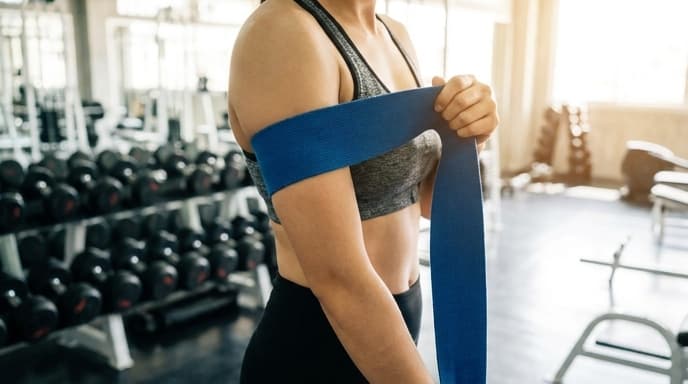
Blood Flow Restriction training is a technique that involves using specialized cuffs or bands to partially restrict blood flow out of a working muscle. This allows you to train with very light weights (typically 20-40% of your one-rep max) while still triggering significant muscle growth. The key to doing this safely and effectively lies in choosing the right equipment.
Understanding BFR: It's Not a Tourniquet
The goal of BFR is to slow the venous return of blood from the muscle, while still allowing arterial inflow. This creates a large 'pump' and a buildup of metabolic byproducts, which signals the body to build muscle. It is not about completely cutting off circulation. That's why the type of band you use is critically important. A narrow, rigid strap can act as a tourniquet, which is dangerous and defeats the purpose of the training.
Types of BFR Bands
BFR equipment generally falls into two categories, with one being far more accessible for personal use.
Personal BFR Bands (Practical BFR): These are what most consumers will purchase. They are typically wide, elastic bands with a buckle or velcro system. They are designed to be manually tightened to a specific perceived pressure. Their elasticity allows the muscle to contract and swell, and their width helps distribute pressure safely.
Pneumatic BFR Cuffs: These are automated, wider cuffs used in clinical and professional settings. They inflate to a specific, personalized pressure measured by a doppler ultrasound. While they are the gold standard for precision, they are significantly more expensive and generally not intended for personal use.
Key Features to Look for in Personal BFR Bands
When shopping for BFR bands for home or gym use, these are the critical features to evaluate.
- Width: This is a crucial safety feature. Wider bands (at least 2 inches for arms, 3-4 inches for legs) distribute pressure more evenly and are less likely to occlude arteries completely. Avoid anything that looks like a thin, narrow strap or surgical tubing.
- Material: The band should be made of a flexible, elastic material. This allows the band to stretch as your muscle contracts, preventing it from digging in and causing nerve damage.
- Securing Mechanism: Look for a robust and easy-to-use securing system, like a plastic or metal buckle with a locking mechanism. This ensures you can get a consistent pressure and that the band won't pop open mid-set. Some models have numbers or markings to help you track tightness.
- Pressure Feedback: While not as precise as pneumatic systems, some practical bands include a pressure gauge or a numbered system to help you apply consistent pressure session to session. This is a highly desirable feature.
Frequently Asked Questions
Can I just use knee wraps or surgical tubing for BFR?
No. This is strongly discouraged. Knee wraps are often too rigid and their width can vary. Surgical tubing is far too narrow and can easily function as a dangerous tourniquet, increasing the risk of nerve or vascular damage. Always use equipment specifically designed for BFR.
Where on the limb do the bands go?
BFR bands are always placed at the most proximal part of the limb. For arms, this is at the very top of the bicep, high in the armpit. For legs, it is at the very top of the thigh, as high as it will go.
How tight should the bands be?
On a scale of 1 to 10, the perceived pressure should be around a 7 out of 10 for the legs and a 6 out of 10 for the arms. You should not feel any numbness, tingling, or paleness in the limb. This is why professional guidance is so important when learning the technique.
Key Takeaways
- Always consult a medical professional and certified trainer before beginning BFR training.
- Choose wide, elastic bands specifically designed for BFR. Avoid narrow, rigid straps or DIY solutions.
- The goal is to restrict venous blood flow out, not arterial flow in. The equipment must allow for this.
- A good securing mechanism and pressure markings are valuable features for consistency and safety.
- Never continue if you feel numbness, tingling, or sharp pain. This is not a 'no pain, no gain' modality.
Related Reading
- A Buyer’s Guide to Adjustable Dumbbells
- What to Look for in a Yoga Mat for Home Practice
- A Practical Guide to Autoregulation in Your Training