
The jump rope is a simple, portable, and incredibly effective piece of fitness equipment. But the difference between a frustrating, tangled mess and a smooth, rhythmic workout often comes down to the rope itself. A well-chosen jump rope matches your skill level and goals, making your training more efficient and enjoyable.
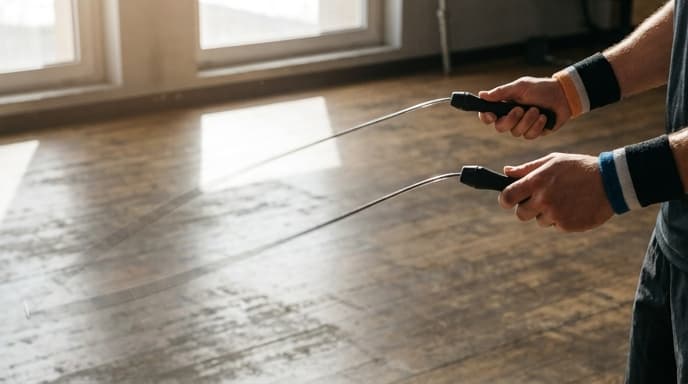
This guide breaks down the three key elements to consider when buying a jump rope: the rope material, the handles, and the length. Getting these right will help you level up your cardio game, whether you're a complete beginner or practicing advanced skills.
Choosing the Right Rope Material
The material of the rope itself dictates its speed, durability, and the type of feedback it provides. Each has its own best use case.
- PVC (Polyvinyl Chloride): These are often called 'licorice' ropes. They are lightweight, affordable, and durable. The slightly heavier weight compared to a speed rope provides good feedback, making it easier for beginners to feel the rope's position as it rotates. They are a fantastic all-around option for general fitness.
- Steel Cable (Speed Ropes): These ropes consist of a thin steel wire coated in nylon or vinyl. They are extremely light and fast, designed for advanced skills like double-unders. They offer very little feedback and can be unforgiving for beginners, but are the top choice for speed and performance.
- Beaded Ropes: These feature plastic segments threaded over a cord. The weight of the beads makes the rope's rotation very audible and easy to feel, which is excellent for learning rhythm and timing. They are durable and often used in freestyle and jump rope teams.
What to Look for in Handles
The handles are your connection to the rope, and their design significantly impacts performance.
The most important feature is the rotation mechanism. The best jump ropes use ball bearings inside the handle. This allows the rope to spin freely, quickly, and smoothly with minimal wrist movement, preventing the rope from twisting or tangling. Cheaper ropes simply have the cable fixed into the plastic, which creates friction and leads to a clunky rotation.
You can also find weighted handles. These add resistance to work your grip, forearms, and shoulders more intensely. They are a good option for those looking to add a strength component to their cardio, but are not ideal for learning new skills or focusing on speed.
Getting the Length Just Right
A rope that is too long will be sloppy and slow, while one that is too short will constantly catch on your feet. Finding the correct length is simple.
To measure, step on the middle of the rope with one foot. Pull the handles up towards your shoulders. For a beginner, the end of the handles (not the cable) should reach your armpits. As you become more advanced, you may prefer a slightly shorter rope (reaching your chest) for faster rotation. Most quality jump ropes are adjustable, allowing you to trim the cable to your perfect length.
Frequently Asked Questions
What's the best jump rope for a total beginner?
A PVC rope or a beaded rope is your best bet. Both provide enough weight and feedback to help you learn the timing and rhythm of jumping. Look for one with ball-bearing handles and an adjustable length.
Are weighted jump ropes good for weight loss?
Jumping rope in general is excellent for burning calories. A weighted rope (where the rope itself is heavier, not just the handles) increases the resistance, forcing your entire body to work harder and potentially burning more calories. However, they are much more taxing and may not be suitable for long sessions.
Can I use a speed rope outdoors on concrete?
It's not recommended. The abrasive surface of concrete or asphalt will quickly shred the thin coating on a steel cable, ruining the rope. It's best to use speed ropes on a smooth gym floor or a jump rope mat.
Key Takeaways
- For beginners, a PVC or beaded rope provides great feedback for learning rhythm.
- For speed and advanced skills like double-unders, a steel cable speed rope is the best choice.
- Look for handles with ball bearings for a smooth, fast, and tangle-free rotation.
- To find the right length, step on the rope; the handles should reach your armpits for beginners.
- Most quality ropes are adjustable, which is a key feature for getting a custom fit.
Related Reading
- The 20-Minute Hotel Room Workout for Staying Strong on the Road
- A Buyer's Guide to Foam Rollers: Density, Texture, and Size Explained
- A Simple Homemade Electrolyte Drink for Post-Workout Hydration