
You've invested in a powerful fitness tracker to monitor your health, workouts, and sleep. But the default strap it came with might not be the best choice for all situations. The material of your wearable's band can impact comfort, sensor accuracy, and even cause skin irritation if not chosen and cared for correctly.
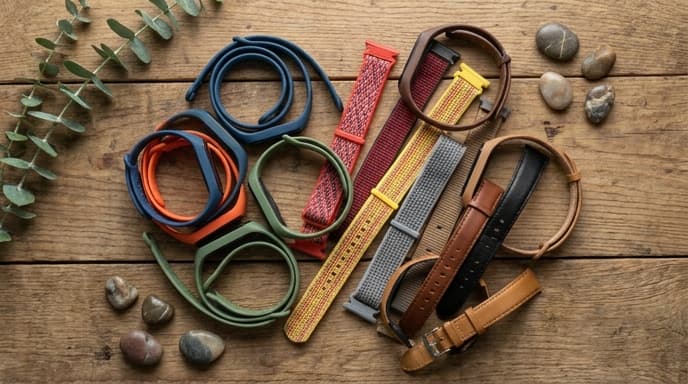
This guide compares the most common fitness tracker strap materials—silicone, nylon, leather, and metal—to help you pick the right one for your needs, whether you're hitting the gym, heading to the office, or settling in for the night.
Silicone and Fluoroelastomer: The Workout Standard
This is the default material for most sports-focused wearables, and for good reason. Silicone and its higher-end cousin, fluoroelastomer, are durable, water-resistant, and easy to clean.
- Pros: Excellent for high-intensity, sweaty workouts. Won't absorb moisture. Very durable and comes in many colors.
- Cons: Can trap moisture and heat against the skin, which may lead to irritation for some people. Not very breathable.
This is the strap you want for running, swimming, and strength training. Just be sure to take it off, rinse both the strap and your wrist, and dry them thoroughly after a workout to prevent bacteria buildup.
Woven Nylon: The Comfort Champion
Woven nylon straps, often with a simple hook-and-loop closure, are a popular alternative for all-day wear and sleep tracking. They are soft, lightweight, and breathable.
- Pros: Extremely comfortable and lightweight. Breathable material reduces sweat buildup. Infinitely adjustable for a perfect fit, which can improve sensor accuracy.
- Cons: Absorbs sweat and water, so it needs to be washed and dried periodically. Can show dirt and fray over time.
This is an ideal choice for 24/7 wear, especially for sleep tracking where comfort is paramount. Its ability to get a snug-but-not-tight fit is also great for optical heart rate sensor performance.
Leather and Metal: For Style, Not Sport
Leather and metal straps (like stainless steel or titanium) are designed to make your fitness tracker look more like a traditional watch. They are perfect for the office or social occasions but are not suited for exercise.
- Pros: Offer a premium, stylish look. Durable and classic materials.
- Cons: Not suitable for workouts. Leather can be damaged by sweat and water. Metal can be heavy and uncomfortable during activity and may not provide a snug enough fit for accurate sensor readings.
Reserve these straps for times when you are prioritizing aesthetics over performance tracking. Swapping them out before a workout is essential.
Frequently Asked Questions
Why am I getting a rash from my watch band?
This is often a form of contact dermatitis. It can be caused by an allergic reaction to a material (like nickel in some metal buckles) or, more commonly, by moisture, soap, and bacteria trapped under a non-breathable strap like silicone. Cleaning the strap and your wrist daily and ensuring they are dry can often solve the problem.
How should I clean my watch strap?
For silicone, use mild soap and water and dry thoroughly. For nylon, hand wash it with a gentle detergent and let it air dry completely before wearing it again. Leather straps require specialized leather cleaner and should be kept dry.
Can the strap affect heart rate accuracy?
Yes. For the optical heart rate sensor on the back of your wearable to work correctly, it needs consistent skin contact. The strap should be snug enough that the device doesn't move around, but not so tight that it restricts blood flow. A strap that is easily adjustable, like woven nylon, can make it easier to find this sweet spot.
Key Takeaways
- Silicone straps are best for intense, sweaty workouts due to their durability and water resistance.
- Woven nylon straps are the most comfortable for all-day wear and sleep tracking because they are soft and breathable.
- Leather and metal straps are for aesthetic purposes and should not be worn during exercise.
- Proper fit is crucial for sensor accuracy; the band should be snug but not uncomfortably tight.
- Regularly clean your strap and wrist to prevent skin irritation, especially after workouts.
Related Reading
- What Your Wearable's Blood Oxygen (SpO2) Data Actually Means
- How to Interpret Skin Temperature Data from Your Fitness Tracker
- Readiness Scores Explained: The Science Behind Whoop and Oura's Daily Numbers