
Grip strength is one of the most functional—and often overlooked—elements of fitness. A strong grip is crucial for lifting heavy, excelling in sports like climbing and martial arts, and even for everyday tasks. Investing in a grip trainer is a simple way to target your hand and forearm muscles directly.
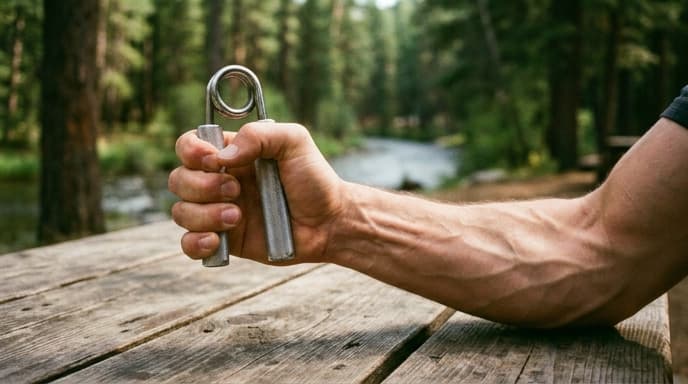
But not all grip trainers are created equal. They come in various styles, each designed for a slightly different purpose. This guide will walk you through the most common types of grip trainers and help you choose the one that best fits your goals, whether you're aiming to crush a new deadlift PR or simply open a stubborn jar.
Understanding the Types of Grip Strength
Before you choose a tool, it helps to know what you're training. Grip strength can be broken down into a few categories:
- Crushing Grip: The power of your fingers closing into your palm. This is what you use when shaking a hand or squeezing a gripper.
- Pinching Grip: The strength between your thumb and your fingers. Used when holding a weight plate by its edge.
- Supporting Grip: The ability to hold onto something for an extended period, like during a farmer's walk or a deadlift.
Most common hand grippers primarily train your crushing grip.
Types of Grip Strength Trainers
Here are the most common styles you'll find when shopping for a grip trainer.
Adjustable Hand Grippers: These are often plastic-handled devices with a dial that lets you change the resistance level, typically ranging from very light to moderately heavy. They are an excellent starting point for beginners because they allow for progressive overload in small increments without needing to buy multiple devices.
Torsion Spring Grippers: These are the classic, heavy-duty metal grippers with two handles connected by a coiled spring. They are not adjustable; each gripper is rated for a specific resistance level. They are the gold standard for building maximum crushing strength and are popular among serious strength athletes. You typically buy them in a series as you get stronger.
Hand Therapy Putty: This is a silicone-based putty that comes in various resistance levels (indicated by color). It's fantastic for rehabilitation, improving dexterity, and training pinch grip, as you can squeeze, stretch, and pinch it in countless ways. It provides a different kind of resistance than a mechanical gripper.
Finger Extensor Bands: While not strictly a 'gripper,' these are important accessory tools. They are small bands that fit over your fingers and provide resistance when you open your hand. They work the opposing muscles (extensors) to prevent muscle imbalances from all the squeezing.
How to Choose the Right Resistance
Choosing the right starting resistance is key to making progress without injury.
For adjustable grippers, simply start at the lowest setting and work your way up. You've found the right starting weight when you can complete 8-12 full, controlled repetitions.
For torsion spring grippers, it's a bit trickier. Many brands have their own rating systems. A good starting point for an average person is a model rated around 100 lbs. The goal is to find a gripper you can fully close for at least 1-5 reps. If you can't close it at all, it's too heavy. If you can do more than 15 reps easily, it's too light.
Frequently Asked Questions
How often should I train my grip?
The muscles in your hands and forearms are resilient but can be overtrained. Start with 2-3 sessions per week on non-consecutive days. Listen to your body and allow for adequate recovery.
Should I just squeeze a tennis ball?
Squeezing a tennis ball or stress ball is fine for stress relief or very basic rehabilitation, but it doesn't provide enough resistance to build significant strength. A dedicated grip trainer with adjustable or progressive resistance is necessary for making real gains.
What's the difference between crush grip and support grip?
Crush grip is about maximal force in a short squeeze. Support grip is about endurance—how long you can hold on. While related, they are best trained differently. Grippers build crush grip, while exercises like dead hangs and farmer's walks build support grip.
Key Takeaways
- Identify your goal: Beginners and those wanting versatility should start with an adjustable gripper.
- For building maximum crushing strength, torsion spring grippers are the preferred tool.
- Don't neglect the opposing muscles; use extensor bands to keep your hands balanced and healthy.
- Start with a resistance level that allows you to perform 8-12 controlled reps to failure.
- Grip training is a form of strength training; ensure you allow for adequate recovery between sessions.
Related Reading
- How to Choose a Mechanical Keyboard Switch for Your Playstyle
- A Buyer’s Guide to Adjustable Dumbbells
- A Practical Guide to Autoregulation in Your Training