
If you're tracking your fitness progress, the number on a traditional scale doesn't tell the whole story. Gaining two pounds could be muscle, not fat. A smart scale goes deeper, offering insights into your body composition. This guide will walk you through what these metrics mean and how to choose a device that helps you level up your training.
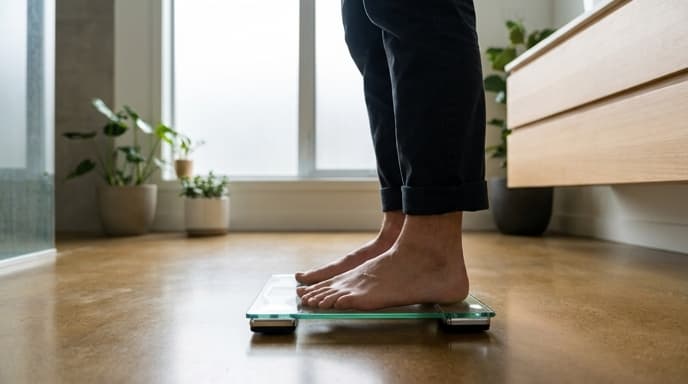
Understanding the data is the first step. A smart scale gives you a more complete picture of your health, helping you see the effects of your diet and exercise on what really matters: your body's makeup.
How Smart Scales Measure Body Composition
Most smart scales use a technology called Bioelectrical Impedance Analysis (BIA). It works by sending a tiny, imperceptible electrical current up through one foot and down the other. Since fat, muscle, and bone conduct electricity differently, the scale measures the resistance (impedance) to this current to estimate your body composition.
While BIA is not as precise as a clinical DEXA scan, it's an excellent tool for tracking trends over time. Consistency is key: weigh yourself at the same time, under the same conditions (e.g., first thing in the morning) for the most reliable data.
Key Metrics to Understand
A good smart scale will track more than just your weight. Here are the most important metrics and what they mean for your fitness journey.
Body Fat Percentage: This is the proportion of your body that is composed of fat. It's a more useful indicator of health than Body Mass Index (BMI), which doesn't distinguish between fat and muscle.
Muscle Mass: This is the total weight of muscle in your body. If you're strength training, you want to see this number increase or stay stable, even if your total weight doesn't change much.
Body Water Percentage: This metric indicates your hydration level. It can fluctuate daily, affecting your weight and BIA readings. Tracking it helps you understand these fluctuations.
Bone Mass: This is the estimated weight of your bone tissue. While it doesn't change quickly, a significant long-term drop could be worth discussing with a health professional.
What to Look for in a Smart Scale
When you're ready to buy, consider these features to find the right scale for your needs.
- Connectivity: Scales connect to your phone via Bluetooth or Wi-Fi. Wi-Fi is often more convenient as it syncs your data automatically without you needing to open the app nearby.
- App Ecosystem: The scale is only as good as its app. Look for an app that presents data clearly, shows trends over time, and ideally integrates with other fitness apps you use, like Apple Health, Google Fit, or Strava.
- Number of Users: If multiple people in your household will use the scale, make sure it can automatically recognize and track each person's data separately.
- Accuracy and Consistency: No home scale is perfectly accurate, but it must be consistent. Look at reviews for mentions of consistent, repeatable measurements. A scale that gives you three different readings in five minutes is not a useful tool.
Frequently Asked Questions
Is BIA technology safe?
Yes, the electrical current used in BIA scales is extremely low and is widely considered safe for most people. However, individuals with implanted medical devices like pacemakers should consult their doctor or avoid using them as a precaution.
How accurate are smart scales?
Consumer-grade smart scales are not as accurate as medical-grade equipment. Their value lies in tracking trends. A scale might be off by a few percentage points on body fat, but if it consistently shows that percentage decreasing over weeks, it's providing valuable feedback.
Do I need Wi-Fi for a smart scale?
Not necessarily. Many scales use Bluetooth to sync with an app on your phone when it's nearby. Wi-Fi models offer the convenience of syncing automatically whenever you weigh yourself, without needing your phone present.
Key Takeaways
- Smart scales use Bioelectrical Impedance Analysis (BIA) to estimate body composition metrics like body fat percentage and muscle mass.
- Focus on trends over time rather than single-day readings, as factors like hydration can cause fluctuations.
- When choosing a scale, prioritize a clear and useful app, reliable connectivity (Wi-Fi is often better), and consistent measurements.
- Key metrics to track for fitness are body fat percentage and muscle mass, which provide more insight than weight alone.
- These devices are for informational purposes and should not be used for medical diagnosis.
Related Reading
- What Your Resting Heart Rate (RHR) Reveals About Your Recovery
- Acute vs. Chronic Training Load: The Metric That Predicts Fitness and Burnout
- How to Calibrate Your New Fitness Wearable for More Accurate Data