
We all know we should drink more water, but in the middle of a busy day, it's easy to forget. A smart water bottle is a high-tech solution to this age-old problem. It's designed to track how much you drink and actively remind you to stay hydrated. But are these gadgets a powerful wellness tool or an unnecessary expense?
This guide will explore the features of smart water bottles, their pros and cons, and help you decide if one is a worthwhile investment for your health and lifestyle.
What Makes a Water Bottle 'Smart'?
Smart water bottles integrate technology to go beyond simply holding water. Their core features usually revolve around tracking and reminders, connecting to an app on your smartphone to create a personalized hydration plan.
Key Feature 1: Intake Tracking
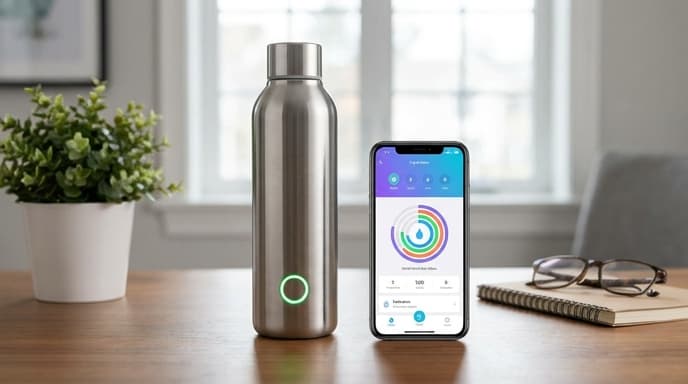
The primary function is to automatically measure how much water you consume. Different bottles do this in different ways, often using a sensor in the base or cap to detect changes in water level. The data is then synced to a companion app, so you can see your progress toward a daily goal without manually logging every sip.
Key Feature 2: Reminders
This is the active component. To prevent you from forgetting to drink, smart bottles use various cues. The most common reminder is a glowing base or ring that lights up periodically. Some may also send push notifications to your phone. This visual cue on your desk can be a surprisingly effective nudge.
Key Feature 3: App Integration
The brain of the system is the smartphone app. Here, you can:
- Set a personalized daily hydration goal based on your age, weight, activity level, and even the local weather.
- View your intake history by day, week, and month.
- Sync your data with other health apps like Apple Health or Google Fit.
- Customize the reminder frequency and the color of the bottle's glow.
Advanced Smart Bottle Features
Some premium models offer additional technology beyond tracking and reminders:
- Water Purification: Certain bottles have a UV-C LED light built into the cap. This technology can neutralize bacteria and viruses, purifying your water and cleaning the inside of the bottle. This is a great feature for travelers or those concerned about water quality.
- Temperature Sensing: A few models can tell you the temperature of the liquid inside, which is a nice-to-have but non-essential feature.
Pros and Cons of a Smart Water Bottle
Potential Benefits:
- Builds Habits: The consistent reminders can genuinely help you build the habit of drinking water regularly.
- Data-Driven Motivation: For people motivated by tracking and achieving goals, seeing your progress in an app can be a powerful incentive.
- Improved Accuracy: Automatic tracking is more accurate and less hassle than trying to remember to log your intake manually.
Potential Downsides:
- Cost: They are significantly more expensive than a standard reusable water bottle.
- Charging: The 'smart' features are powered by a rechargeable battery, meaning you have another device to keep charged.
- Complexity: For some, it might feel like over-engineering a simple problem that could be solved with a basic reminder app on your phone.
Frequently Asked Questions
How accurate is the tracking?
Accuracy varies by brand, but most modern smart bottles are quite reliable for tracking sips and refills. However, they can't tell what you're drinking, so they assume it's water.
Are they difficult to clean?
Most smart bottles are designed with cleaning in mind. The electronic components (usually in the base or cap) are removable, and the bottle body itself is often dishwasher safe. Always check the manufacturer's instructions.
Do I really need one?
This is the key question. If you consistently struggle to drink enough water and find that visual cues and data tracking motivate you, a smart water bottle could be a game-changer. If you are already good at staying hydrated or are happy with a simpler reminder system, it's likely an unnecessary expense.
Key Takeaways
- Smart water bottles automatically track your water intake and use glowing reminders to help you build a hydration habit.
- The core system consists of the bottle's sensor, a glowing reminder light, and a companion smartphone app.
- Advanced models may include features like UV-C water purification, which is useful for travel and cleanliness.
- The main benefits are automated habit-building and data-driven motivation.
- The primary downsides are high cost and the need to charge another device.
Related Reading
- How to Maintain a Meditation Practice While Traveling
- A Simple Framework for Eating Healthy While Traveling
- What Your Wearable’s Blood Oxygen (SpO2) Data Actually Means