
For any runner looking to improve, data is a powerful tool. While your smartphone can track a run, a dedicated GPS running watch is a significant upgrade in accuracy, convenience, and the sheer depth of information it provides. It's a training partner on your wrist that can guide your workouts and monitor your recovery.
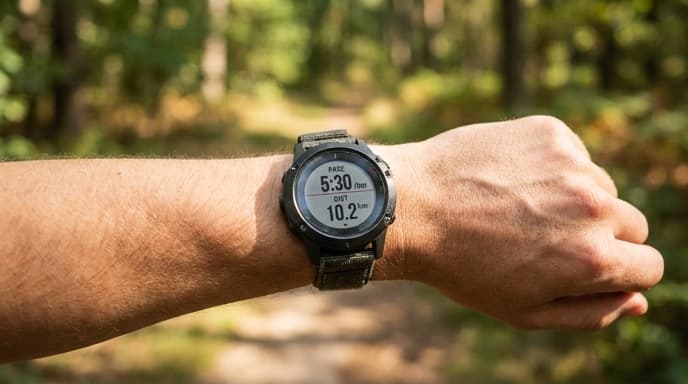
But the market is packed with options, from simple trackers to powerful multisport computers. This guide will cut through the noise and focus on the key features you should look for to choose a running watch that will truly elevate your training.
The Essentials: GPS Accuracy and Battery Life
These two features are the bedrock of any good running watch. If they aren't solid, nothing else matters.
GPS Accuracy: This is the watch's ability to accurately track your path and distance. In the past, this meant just having a good GPS chip. Today, the gold standard is multi-band or dual-frequency GPS. This technology allows the watch to receive signals from multiple satellite systems on multiple frequencies, which dramatically improves accuracy in challenging environments like dense cities with tall buildings or deep canyons with a limited view of the sky.
Battery Life: Look for two numbers: battery life in smartwatch mode and in GPS mode. The GPS mode number is what matters for running. Ensure the watch has enough power to comfortably last through your longest planned run, with a buffer. If you're a marathoner or ultramarathoner, this becomes one of the most critical specs.
Core Running Metrics
Beyond just distance and time, a good running watch provides a wealth of real-time data to guide your effort.
- Pace: The most fundamental running metric, shown in minutes per mile or kilometer. A good watch will show you your current pace, average pace, and lap pace.
- Heart Rate: Most watches have a built-in optical heart rate sensor. As discussed in other articles, this is great for general tracking, but pairing with a chest strap provides superior accuracy for heart rate zone training.
- Cadence: This is your steps per minute. Monitoring cadence can help you improve your running form and efficiency. Many watches can track this right from the wrist.
Advanced Training and Recovery Features
This is where premium running watches really shine, offering insights that go far beyond a single run.
Training Load: This feature analyzes the intensity and duration of your recent workouts to tell you if your training is productive, maintaining, or overreaching. It's a powerful tool for preventing burnout and injury.
Recovery Advisor: Based on your sleep, stress, and recent training, the watch will estimate how many hours you need before your next hard workout. It helps you listen to your body and make smarter training decisions.
Running Dynamics: More advanced watches, sometimes requiring a separate pod or chest strap, can measure metrics like vertical oscillation (how much you bounce), ground contact time, and stride length. These are valuable for runners focused on fine-tuning their form.
Frequently Asked Questions
Do I need a touchscreen on a running watch?
While some watches offer them, many dedicated running watches stick with physical buttons. This is because buttons are more reliable and easier to use with sweaty hands or gloves than a touchscreen. For starting, stopping, and lapping runs, buttons are often superior.
Can I listen to music on a GPS watch?
Many mid-range and high-end models offer onboard music storage. This allows you to download playlists and listen via Bluetooth headphones without carrying your phone. It's a great feature for convenience but will typically reduce battery life during a run.
Is a more expensive running watch more accurate?
Often, yes, particularly regarding GPS. More expensive models are more likely to feature multi-band GPS technology. However, many mid-range watches from reputable brands offer excellent accuracy for most runners' needs. The price increase also buys you more advanced software features, premium materials, and longer battery life.
Key Takeaways
- Prioritize a watch with multi-band GPS for the best accuracy, especially if you run in cities or on trails.
- Check the 'GPS mode' battery life to ensure it can handle your longest runs with a comfortable buffer.
- For the most accurate heart rate data during workouts, pair your watch with a chest strap monitor.
- Advanced features like Training Load and Recovery Advisor can be game-changers for structuring your training and preventing injury.
- Physical buttons are often more practical than a touchscreen for controlling a watch during a run.
Related Reading
- What Your Resting Heart Rate (RHR) Reveals About Your Recovery
- Readiness Scores Explained: The Science Behind Whoop and Oura’s Daily Numbers
- Heart Rate Monitors: Chest Strap vs. Optical Watch Sensors