
If you've ever felt the lingering ache of sore muscles after a tough workout, you know how much it can impact your next training session. A foam roller is a simple, effective tool for what's known as self-myofascial release—a way to massage your muscles, ease tightness, and potentially speed up recovery.
This guide will teach you the fundamental techniques to use a foam roller effectively and safely. You'll learn how to target major muscle groups so you can get back to your training with less soreness and better mobility.
What Is Self-Myofascial Release?
Think of your muscles and the connective tissue around them, called fascia, as a single, interconnected web. When you train hard, this fascia can develop adhesions or 'trigger points'—essentially, tight knots. Self-myofascial release is the practice of applying pressure to these points to encourage them to release.
Using a foam roller allows you to control this pressure yourself. By slowly rolling over a muscle, you help break up these adhesions, increase blood flow to the area, and restore healthy tissue function. The result is often reduced soreness and improved flexibility.
Core Principles of Foam Rolling
Before you start, keep these key principles in mind for a safe and effective session. Bad technique can be ineffective or even cause injury.
- Go Slow: The goal is not to roll back and forth as quickly as possible. Move at a rate of about one inch per second to give your muscles time to adapt to the pressure.
- Pause on Tender Spots: When you find a particularly sensitive area (a trigger point), pause on it for 20-30 seconds. Breathe deeply and try to relax the muscle. The discomfort should gradually subside.
- Avoid Joints and Bones: Never roll directly over your joints (like your knees or elbows) or your spine. Foam rolling is for soft tissue only.
- Breathe: It's common to hold your breath when you feel discomfort. Instead, focus on deep, slow breathing to help your muscles relax and release.
How to Foam Roll Major Muscle Groups
Here are step-by-step instructions for some of the most common areas athletes need to address. Perform these after your workout or on a recovery day.
Quadriceps (Front of Thighs)
Lie face down, placing the foam roller under your thighs. Support your upper body with your forearms, like you're in a plank position. Use your arms to slowly roll your body forward and backward, moving the roller from the bottom of your hip to the top of your knee. To target one leg at a time, you can cross the other leg over it.
Hamstrings (Back of Thighs)
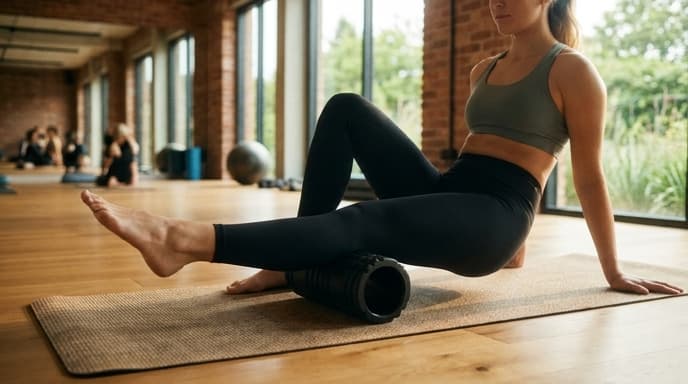
Sit on the floor with your legs straight out in front of you and the foam roller under your hamstrings. Place your hands on the floor behind you for support. Lift your hips off the floor and slowly roll from just below your glutes to the back of your knees. To increase the pressure, cross one leg over the other.
Calves
Sit with the foam roller under your calves. Support yourself with your hands behind you. Slowly roll from your ankles to below your knees. To target the inner and outer calf muscles, rotate your feet inward and outward as you roll.
Frequently Asked Questions
How long should I foam roll for?
A typical foam rolling session can last from 5 to 15 minutes. Spend about 1-2 minutes on each major muscle group, focusing on any particularly tight spots you find.
Does foam rolling hurt?
You should expect some discomfort, especially on tight muscles, but it should not be sharp or unbearable pain. If you experience sharp pain, ease off the pressure or stop rolling that area.
When is the best time to foam roll?
You can foam roll both before and after a workout. Pre-workout, it can help increase blood flow and mobility. Post-workout, it's primarily used to aid recovery and reduce soreness.
Key Takeaways
- Foam rolling is a form of self-myofascial release that helps relieve muscle tightness.
- Roll slowly, about one inch per second, and pause on tender spots for 20-30 seconds.
- Never roll directly over joints, bones, or your lower back spine.
- Focus on major muscle groups like quads, hamstrings, and calves to aid recovery.
- Consistency is key; incorporate foam rolling into your regular recovery routine.
Related Reading
- How to Structure a Deload Week to Maximize Strength and Recovery
- Using Heart Rate Variability (HRV) to Guide Your Training Intensity
- Proprioception Drills to Improve Your Balance, Coordination, and Power