
Most modern fitness wearables track Heart Rate Variability (HRV), but it's often presented as just another number without much context. Unlike step counts or calories burned, HRV is a powerful metric that gives you a direct window into your body's recovery status. Learning to interpret it can be the key to breaking through plateaus and avoiding overtraining.
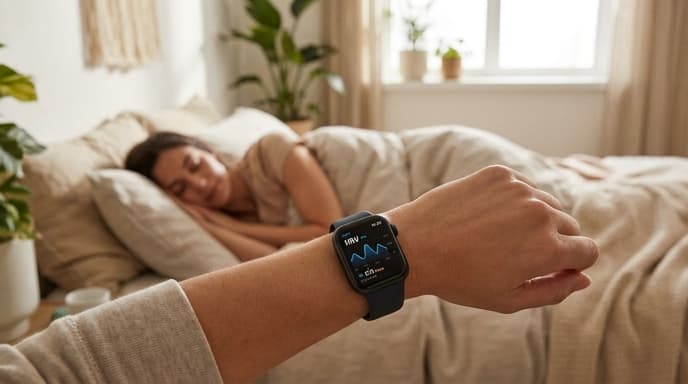
HRV is the measure of the variation in time between each of your heartbeats. This variation is controlled by your autonomic nervous system (ANS), which is the command center for your body's unconscious functions, like breathing and digestion. A higher, more variable HRV is a sign that your nervous system is balanced and resilient—ready to handle stress, like a tough workout. A low HRV indicates your system is under strain and needs more recovery.
Understanding Your Autonomic Nervous System
The ANS has two main branches that HRV helps us monitor:
- The Sympathetic Nervous System (Fight-or-Flight): This is your body's accelerator. It kicks in during stress, be it a workout, a stressful meeting, or a lack of sleep. When it's active, your heart beats in a more regular, metronomic rhythm, causing HRV to drop.
- The Parasympathetic Nervous System (Rest-and-Digest): This is your body's brake pedal. It promotes relaxation and recovery. When it's dominant, your heart rate is more variable, causing HRV to rise.
A healthy, recovered body is able to switch smoothly between these states. A chronically low HRV suggests your 'fight-or-flight' system is stuck in the 'on' position.
A Step-by-Step Guide to Using HRV
Your personal HRV is highly individual. Comparing your numbers to someone else's is meaningless. The only thing that matters is your own trend over time. Here's how to use it.
Step 1: Establish Your Baseline
Before you can draw any conclusions, you need to know what's normal for you. Wear your device consistently (especially overnight) for at least two to four weeks. Your wearable's app will likely calculate your baseline range automatically. This range is your personal benchmark.
Step 2: Monitor Daily Fluctuations
Each morning, check your HRV score against your baseline. Don't overreact to a single day's reading. Look for patterns:
- HRV within your baseline range: This is a green light. Your body is recovered and ready to handle a strenuous workout.
- HRV slightly below your baseline: This is a yellow light. You might be fatigued. Consider reducing the intensity of your workout or focusing on active recovery.
- HRV significantly below your baseline: This is a red light. Your body is under significant stress. This could be from intense training, poor sleep, illness, or mental stress. This is a day to prioritize rest, a light walk, or mobility work.
Step 3: Look at the Weekly Trend
The trend over a week or two is often more insightful than a single day's score. If your HRV is consistently trending downwards, it's a clear sign that your cumulative stress is outpacing your recovery. This is a crucial warning sign of impending overtraining or burnout. It may be time to schedule a deload week.
How to Improve Your HRV
If your HRV is consistently low, you can take active steps to improve your recovery and boost your score. Focus on:
- Consistent Sleep: Aim for 7-9 hours of quality sleep per night, with consistent wake and sleep times.
- Hydration: Drink plenty of water throughout the day.
- Nutrition: Fuel your body with whole foods and avoid large meals or alcohol close to bedtime.
- Stress Management: Incorporate practices like meditation, breathwork, or spending time in nature.
Frequently Asked Questions
What is a 'good' HRV number?
There is no universal 'good' HRV. It varies dramatically based on age, genetics, and fitness level. A physically fit 25-year-old might have an HRV over 100, while a healthy 50-year-old might be in the 30s. The only meaningful comparison is to your own personal baseline.
Why is my HRV low even though I feel fine?
HRV can be a leading indicator of fatigue. Your nervous system often shows signs of stress before you consciously feel tired. It can also be suppressed by factors other than training, such as dehydration, a late meal, alcohol, or mental stress.
Should I measure my HRV in the morning or use the overnight average?
Most modern wearables like Whoop, Oura, and Garmin automatically calculate an average HRV score during your sleep, which is the most reliable and consistent method. If you must take a manual reading, do it first thing in the morning in the same position every day.
Key Takeaways
- Heart Rate Variability (HRV) measures the variation between heartbeats, reflecting the state of your autonomic nervous system.
- A higher HRV generally indicates good recovery and readiness to train, while a low HRV signals stress and the need for rest.
- Your HRV is highly personal; establishing your own baseline over several weeks is the first and most important step.
- Monitor daily scores and weekly trends to make informed decisions about your training intensity.
- Consistently low HRV can be improved by focusing on sleep, hydration, nutrition, and stress management.
Related Reading
- Readiness Scores Explained: The Science Behind Whoop and Oura’s Daily Numbers
- What Your Resting Heart Rate (RHR) Reveals About Your Recovery
- Acute vs. Chronic Training Load: The Metric That predicts Fitness and Burnout