
The jump rope is a timeless, incredibly effective fitness tool. It torches calories, improves cardiovascular health, and builds coordination and agility, all with a piece of equipment you can fit in a backpack. But for many beginners, the experience is more about tripping and frustration than fitness.
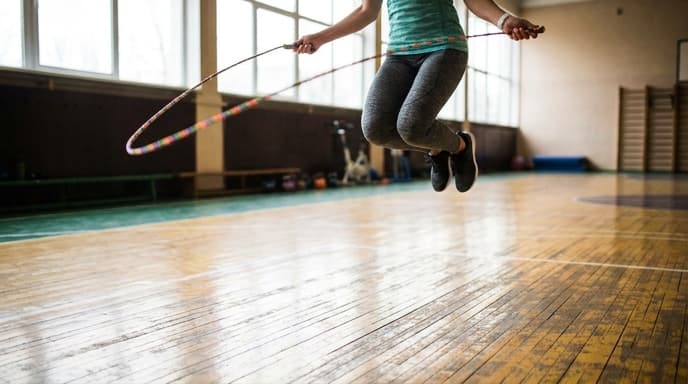
The key to mastering the jump rope is to break it down into its component parts. By learning the rhythm, footwork, and wrist action separately, you can build a smooth, efficient technique that will unlock the full potential of this powerful exercise.
Choosing the Right Rope and Sizing It Correctly
Before you can jump, you need the right tool. A simple speed rope made of PVC or a thin cable is perfect for beginners. Avoid heavy or weighted ropes until you've mastered the basics.
Sizing is critical. To find the right length, follow these steps:
- Step on the very middle of the rope with one foot.
- Pull the handles straight up. They should reach your armpits.
A rope that is too long will be sloppy and slow, while a rope that is too short will constantly catch on your feet. Proper sizing makes learning infinitely easier.
The Foundational Skill: The Basic Bounce
The goal is to be light on your feet and efficient with your energy. The basic bounce is a low-impact movement where you stay on the balls of your feet and jump only high enough for the rope to pass underneath—typically just an inch or two.
Step 1: Master the Footwork (Without the Rope)
Forget the rope for a moment. The first step is to find your rhythm. Practice the basic bounce without a rope in your hands. Jump up and down on the balls of your feet, keeping your knees slightly bent to absorb the impact. The jumps should be small and consistent. Try to do this for 30-60 seconds straight to build endurance and muscle memory.
Step 2: Master the Wrist Action (Without Jumping)
The power to turn the rope comes from your wrists, not your arms and shoulders. Big arm circles are inefficient and tiring. To practice, hold both rope handles in one hand and swing the rope beside you. Focus on making small, quick circles with your wrist. The motion should be smooth and controlled. Practice on both your right and left sides.
Step 3: Putting It Together for Your First Jumps
Now it's time to combine the footwork and the wrist action. Start with the rope behind your feet.
- Swing the rope over your head using those small wrist circles you practiced.
- As the rope comes down in front of you, perform one basic bounce.
- Try to string together two or three jumps in a row. Then five. Then ten.
It's normal to trip and get tangled. Don't get frustrated. Just reset and go again. The goal is consistency, not speed. Focus on a steady rhythm: swing, jump, swing, jump.
Common Mistakes: Double Bounces and Arm Swinging
Two mistakes plague almost every beginner. Recognizing them is the first step to fixing them.
- The Double Bounce: Taking a small, extra hop while the rope is overhead. This breaks your rhythm and is inefficient. The Fix: Go back to practicing the basic bounce without the rope. There should be one jump for every one turn of the rope.
- Swinging with Your Arms: Using your entire arm and shoulder to move the rope. This is exhausting and makes it hard to go fast. The Fix: Keep your elbows tucked in close to your sides and focus on rotating just your wrists.
Frequently Asked Questions
What surface should I jump on?
A forgiving surface like a wooden floor, a rubber gym mat, or a jump rope mat is ideal. Avoid jumping on concrete, which is hard on your joints, or thick carpet, which can snag the rope.
How long should my workouts be?
When you're starting, focus on short intervals. For example, jump for 30 seconds, then rest for 30 seconds. Repeat this 5-10 times. As your endurance and skill improve, you can increase the work intervals and decrease the rest.
How do I learn tricks like double unders?
Master the basic bounce until it is effortless. Once you can jump consistently for several minutes without tripping, you can start working on more advanced skills. The foundation must come first.
Key Takeaways
- Size your rope correctly: when you stand on the middle, the handles should reach your armpits.
- Learn the basic bounce first without the rope, focusing on small, consistent jumps on the balls of your feet.
- The power comes from your wrists, not your arms. Practice making small circles.
- Combine the movements slowly, aiming for consistency over speed.
- Avoid common mistakes like the double bounce and swinging with your full arm.
Related Reading
- A Practical Guide to Heart Rate Zone Training for Any Sport
- 3 Simple Drills to Improve Your Running Form and Efficiency
- The 3-Item Minimalist Gym You Can Pack in Any Suitcase