
When most people think of cardio, they think of pushing hard, breathing heavily, and feeling the burn. But one of the most powerful tools for improving long-term fitness involves the exact opposite: going slow. Zone 2 cardio training is a low-intensity method focused on building a robust aerobic base, which is the foundation upon which all other aspects of fitness are built.
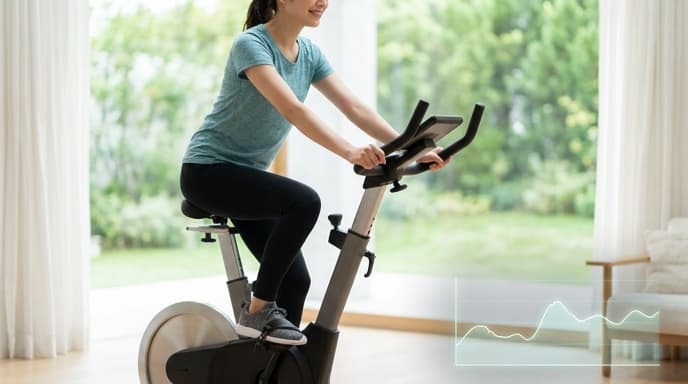
Many athletes and fitness enthusiasts spend most of their time in a 'gray zone'—an intensity that's too hard to provide the benefits of easy training, but not hard enough to provide the benefits of high-intensity training. Zone 2 pulls you out of that trap and into a highly productive state that fundamentally improves how your body produces energy.
What Is Happening in Zone 2?
Training in Zone 2 specifically targets your body's aerobic energy system. At this low intensity, your body becomes incredibly efficient at several key processes:
- Building Mitochondria: Zone 2 training stimulates the growth of new mitochondria and improves the function of existing ones. Mitochondria are the 'power plants' of your cells, responsible for producing the energy (ATP) needed for all activity. More and better mitochondria mean a bigger engine.
- Improving Fat Utilization: At this intensity, your body prefers to use fat as its primary fuel source. Training here makes you better at metabolizing fat, which spares your limited glycogen (carbohydrate) stores for higher-intensity efforts.
- Enhancing Lactate Clearance: Your body is constantly producing and clearing lactate, even at rest. Zone 2 training improves your ability to clear lactate from your muscles, which means you can sustain higher intensities for longer before you 'redline'.
How to Find Your Zone 2
Zone 2 corresponds to roughly 60-70% of your maximum heart rate. While a lab test is the most accurate way to find your zones, there are several simple and effective methods you can use.
The Talk Test
This is the simplest method. During Zone 2 cardio, you should be able to hold a conversation comfortably without gasping for breath. You're breathing more deeply than at rest, but you could speak in full sentences. If you can only manage one or two words at a time, you're going too hard.
The MAF 180 Formula
Developed by Dr. Phil Maffetone, this is a popular formula for estimating the top end of your Zone 2.
- Start with 180.
- Subtract your age. (e.g., a 40-year-old would get 180 - 40 = 140).
- Make adjustments: Subtract 10 if you are recovering from illness or new to exercise. Add 5 if you have been training consistently for over two years without injury.
The resulting number is the maximum heart rate you should aim for during your Zone 2 workouts. For the 40-year-old, their Zone 2 would be in the range of 130-140 beats per minute.
How to Structure a Zone 2 Workout
The key to Zone 2 is duration, not intensity. The benefits are dose-dependent, meaning more is generally better.
- Activity: Any activity that allows you to keep your heart rate steady will work: jogging, cycling, rowing, swimming, or even incline walking on a treadmill.
- Duration: Aim for a minimum of 45 minutes per session. Longer sessions of 60-90 minutes are even more beneficial.
- Frequency: Try to incorporate 2-4 Zone 2 sessions into your training week.
- Discipline: The hardest part of Zone 2 training is having the discipline to go slow enough. Your ego will want you to push harder. Use your heart rate monitor and the talk test to stay in the zone.
Frequently Asked Questions
Will Zone 2 training make me slow?
No. Building a bigger aerobic base will improve your performance at all intensities. A bigger engine means you have a higher ceiling for speed and power. Elite endurance athletes spend up to 80% of their training time in Zone 2.
Can I do Zone 2 training if I'm a strength athlete?
Absolutely. Improving your aerobic fitness will enhance your recovery between sets and between workouts, allowing you to handle more training volume and recover faster. It's a key component of a well-rounded fitness program.
Why do my sessions feel so easy?
They are supposed to! The goal is to stimulate a specific physiological adaptation without creating a lot of systemic stress. This allows you to accumulate a lot of training volume without burning out, and it won't interfere with your high-intensity workouts.
Key Takeaways
- Zone 2 cardio is low-intensity, steady-state training performed at a conversational pace (about 60-70% of max heart rate).
- It is the most effective method for building the body's aerobic base, improving mitochondrial function, and enhancing fat utilization.
- Use the 'talk test' or the MAF 180 formula to easily find your personal Zone 2 heart rate range.
- Aim for 2-4 sessions per week, with each session lasting at least 45 minutes.
- A stronger aerobic base from Zone 2 training improves not only your endurance but also your ability to perform and recover from high-intensity efforts.
Related Reading
- VO2 Max Explained: A Guide to Measuring and Improving Your Aerobic Fitness
- What Your Resting Heart Rate (RHR) Reveals About Your Recovery
- A Practical Guide to Using Heart Rate Variability (HRV) for Recovery