
A modern smartphone runs on two separate processors: an application processor for the operating system and apps, and a baseband processor that manages cellular radio communication. Because the baseband modem connects directly to external cellular networks, it represents an exposed attack surface.
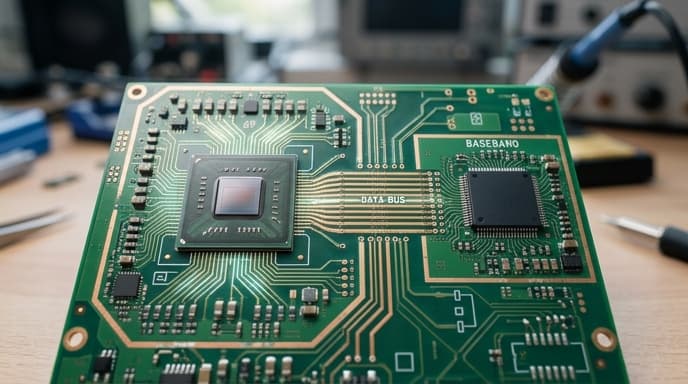
Understanding cellular baseband isolation in mobile banking shows how device hardware confines modem vulnerabilities, preventing compromised radio firmware from gaining access to session data and two-factor authentication codes.
The Two-Processor Architecture in Modern Phones
The application processor (AP) runs mobile operating systems like iOS or Android along with installed financial software. It handles authentication, stores encrypted tokens, and renders account screens.
The baseband processor (BP) runs a dedicated real-time operating system that controls radio frequencies, modulation, and cell tower handoffs. The BP directly processes signals transmitted over the air, including signals from rogue cell sites known as IMSI catchers.
If the baseband processor had shared access to the application processor's memory, a malicious radio packet could grant an attacker control over the primary operating system, exposing stored credentials and active banking sessions.
Input-Output Memory Management Units (IOMMUs)
Modern mobile chipsets isolate these two processors using an Input-Output Memory Management Unit (IOMMU) on the bus connecting the modem to the rest of the system.
- Dedicated Memory Regions: The modem has access only to assigned memory buffers used for transmitting and receiving network packets.
- Protected System Memory: The modem cannot read or write to memory where application code, credentials, and user data live.
- Structured Interface: The modem and application processor communicate through formal message-based procedure calls instead of shared pointers.
If an attacker sends malicious radio frames that exploit baseband firmware, the IOMMU blocks the compromised modem from reading application memory or capturing active banking data.
Guarding Against 2G Downgrade Interception
Baseband isolation protects device memory, but rogue base stations can still exploit legacy network protocols. Older 2G networks lack mutual authentication, allowing unauthorized towers to force a device to downgrade its connection and transmit unencrypted SMS verification codes.
Current mobile operating systems let users disable 2G connectivity at the modem level. Locking the device to 4G and 5G networks prevents it from connecting to unauthenticated 2G towers, stopping cleartext SMS interception over the air.
Frequently Asked Questions
Can a rogue cell tower read my banking app screen?
No. Cellular towers receive network traffic, not display output. Hardware baseband isolation and TLS encryption prevent towers from reading device memory or intercepting app sessions.
Why is disabling 2G important for financial security?
Legacy 2G networks do not authenticate towers to devices. Disabling 2G prevents rogue base stations from forcing downgrade attacks to intercept SMS authentication codes in cleartext.
Does baseband isolation prevent carrier SIM swapping?
No. SIM swapping occurs inside the cellular carrier's provisioning systems, not on the phone itself. Baseband isolation only protects handset memory from radio interface exploits.
Key Takeaways
- Smartphones separate the cellular modem processor from the main application processor.
- Hardware IOMMUs prevent the modem from accessing application memory and stored credentials.
- Baseband isolation prevents compromised radio firmware from hijacking banking sessions.
- Disabling 2G connectivity stops rogue towers from downgrading networks to intercept SMS messages.
- Hardware isolation provides the primary defense against radio-based device compromise.
Related Reading
- eSIM Swap Fraud: How Telco Hardware Shifts Threaten Mobile Banking
- Hardware Security Modules vs StrongBox: How Modern Phones Store Banking Keys
- SIM-Binding Mandates in Banking Apps: How Hardware Identity Locks Stop Remote Takeovers