
When you authorize a payment or transfer money inside a banking application, the underlying private keys never enter regular system memory. Modern mobile operating systems rely on physically isolated microchips to store banking keys in hardware security modules and separate cryptographic subsystems.
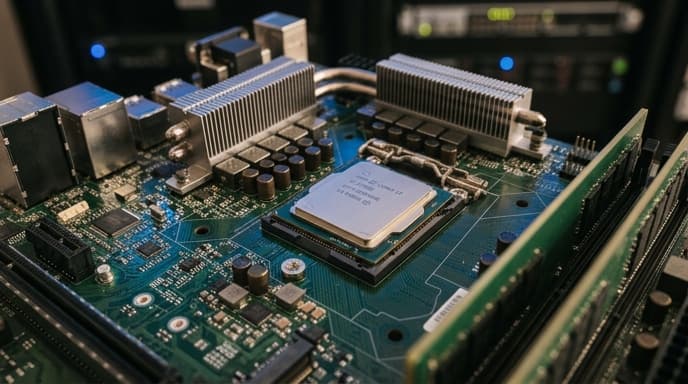
Because of this separation, an attacker with root access to the main operating system still cannot export private signing keys or clone session tokens. The division of labor among the main processor, Trusted Execution Environments, and dedicated StrongBox hardware protects mobile banking operations.
The Vulnerability of Shared System Memory
Mobile operating systems run millions of lines of code across hardware drivers, wireless radios, and third-party apps, creating a wide attack surface.
If banking credentials, biometric templates, and private keys sat in main system RAM, any privilege escalation exploit could expose them to background processes. To prevent this, mobile chipmakers shifted sensitive operations into dedicated execution environments.
Trusted Execution Environments vs Dedicated Silicon
Mobile security hardware uses different tiers of physical and logical isolation:
- Trusted Execution Environment (TEE): An isolated operating mode on the primary application processor, such as ARM TrustZone. It runs its own secure microkernel but shares the CPU silicon and memory buses with the primary OS.
- Embedded Secure Element (eSE): A separate microchip with dedicated memory, a secure clock, and hardware crypto accelerators designed to resist physical probing.
- Android StrongBox Keymaster: A dedicated hardware security module built into compatible devices, with its own CPU cores, flash storage, and tamper-resistant casing.
How Apple Secure Enclave and Android StrongBox Sign Payments
When you set up mobile banking or register biometrics, the app requests an asymmetric key pair. The private key is created directly inside the isolated hardware and configured so it cannot be exported.
During a transfer, the signing process works in a fixed order:
- The banking application builds an unsigned payload with the amount, recipient, and timestamp.
- The app hands this payload across the hardware boundary to the Secure Enclave or StrongBox.
- The secure chip checks for valid biometric input or a device PIN directly from the sensor bus, bypassing the main OS.
- Once verified, the private key signs the transaction inside the secure chip.
- The chip outputs only the resulting digital signature back to the app, which forwards it to the bank.
Physical Tamper Resistance and Side-Channel Protection
Dedicated security chips are built to withstand physical attacks on stolen hardware. They include hardware defenses against differential power analysis, laser fault injection, and bus snooping.
These microcontrollers monitor for abnormal supply voltages, unusual temperatures, and physical chip decapsulation. If a sensor detects an attack, the chip erases its volatile registers and shuts down communication lines.
FAQ
Can a rooted or jailbroken phone expose my banking private keys?
No. When a key is generated inside a Secure Element or StrongBox with export restrictions, root access on the primary OS cannot pull the raw private key out of the chip.
What is the functional difference between an Android TEE and StrongBox?
A TEE relies on logical partitioning within the main application processor. StrongBox uses a separate physical chip with its own CPU, memory, and tamper sensors.
Are biometric images stored inside these security chips?
No. Fingerprint scans and facial recognition models are converted into mathematical representations by the sensor hardware. Raw images are never saved to the chip.
Key Takeaways
- Dedicated security chips keep private banking keys off the main operating system.
- Private keys stay inside the hardware; only cryptographic signatures leave.
- StrongBox and Secure Elements use physical hardware separation rather than software permissions.
- Tamper circuits defend against voltage attacks, physical decapsulation, and bus monitoring.
- Biometric verification authorizes the chip to sign transactions locally.
Related Reading
- Biometric App Locks on Mobile Banking: Device Passcode vs. Secure Hardware
- How Passkeys Change Banking Security and What Happens When Your Phone Fails
- Point-of-Sale Firmware Tampering: How Hardware Attestation Protects Retail Terminals