
Trading firms and quant desks frequently deploy algorithms, market data pipelines, and execution engines to cloud infrastructure. However, public cloud platforms rely on multi-tenancy, running virtual machines from different customers on the same physical CPU.
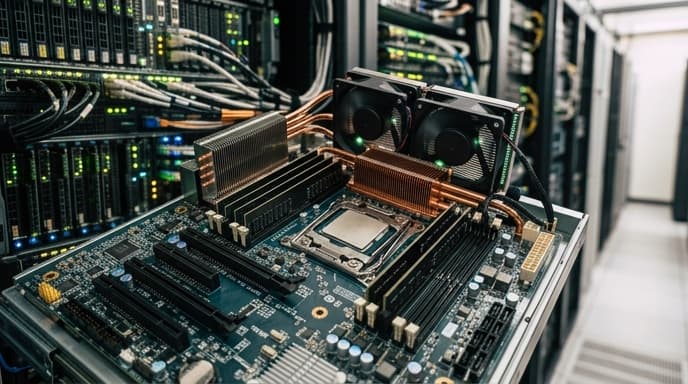
Examining microarchitectural side-channel attacks in trading explains why financial systems must protect against hardware flaws like Spectre, where CPU performance optimizations can allow an adjacent virtual machine to read sensitive memory.
The Nature of Speculative Execution Flaws
Modern CPUs use speculative execution to improve performance. When encountering a conditional branch, the processor predicts the path the program will take and executes instructions ahead of confirmation.
If the CPU determines the prediction was wrong, it discards the computed results. However, the speculative path leaves measurable physical footprints: data retrieved during speculative execution remains cached in the processor's memory hierarchy.
By timing memory reads across shared cache lines (using techniques like Flush+Reload), a malicious program running on the same physical CPU can infer data held by another process or virtual machine.
Cryptographic Exfiltration in Multi-Tenant Environments
In quantitative trading and custodial services, memory holds private API keys, proprietary execution logic, and cryptographic signing keys. Side-channel vulnerabilities create distinct operational risks:
- Key Extraction: Small differences in cache lookup times during encryption routines can expose cryptographic keys bit by bit.
- Order Flow Inspection: An adjacent tenant can monitor memory access patterns to infer when large orders are queued for execution.
- Isolation Failures: Shared CPU cache lines bypass conventional operating system and hypervisor boundaries.
Why Trading Desks Mandate Bare-Metal Deployments
To prevent cross-tenant cache leaks, high-frequency trading firms and asset custodians avoid shared virtualized cloud servers.
These firms deploy dedicated bare-metal instances and configure strict CPU core affinity. They also turn off Simultaneous Multi-Threading (hyper-threading), ensuring that external processes cannot share execution pipelines or Level 1 cache storage with cryptographic services.
Disabling hyper-threading and running on single-tenant hardware reduces raw server density, but it eliminates the hardware side channels that expose trading systems to data exfiltration.
Frequently Asked Questions
What is a CPU side-channel attack?
A side-channel attack does not exploit application code bugs. Instead, it measures physical side effects—such as memory cache timing differences or CPU power fluctuations—to infer secret data.
Can an attacker use Spectre to steal my retail trading account?
Spectre requires running native code on the same physical processor as the target. It is a threat to multi-tenant cloud platforms and shared servers, not isolated consumer devices.
Why does disabling hyper-threading improve financial hardware security?
Hyper-threading allows two threads to share a single physical CPU core and its caches. Disabling it prevents an untrusted process from observing real-time cache behavior during cryptographic operations.
Key Takeaways
- Speculative execution leaves residual data inside physical CPU memory caches.
- Cache timing attacks let programs on shared hardware infer data from other tenants.
- Cryptographic keys and proprietary trade orders are vulnerable in multi-tenant environments.
- Institutional trading firms avoid multi-tenant cloud servers in favor of bare-metal hardware.
- Disabling hyper-threading prevents foreign processes from sharing execution units and Level 1 caches.
Related Reading
- Low-Latency Network Interfaces: How Solarflare and NIC Hardware Shape Market Execution
- Hardware Security Modules in Banking: How Core Ledger Systems Protect Master Keys
- Precision Time Protocol Hardware: How Exchange Clocks Enforce Market Integrity