
When you log into a banking platform or approve a transfer, secondary authentication is your last line of defense. Financial institutions typically rely on mobile app push notifications or hardware-generated one-time codes. Comparing push notifications vs hardware TOTP for banking highlights how these authentication methods perform against credential theft, reverse-proxy phishing, and account takeovers.
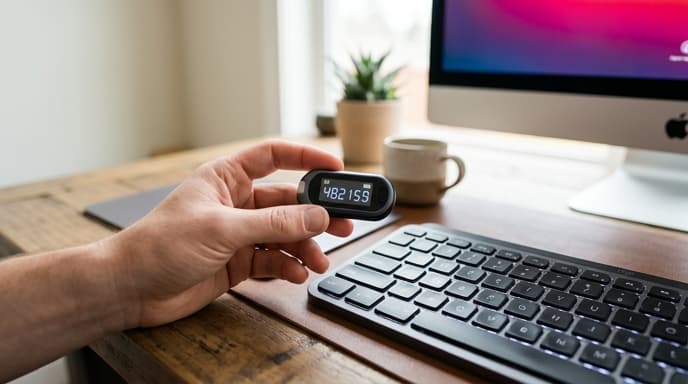
Tapping an approval prompt on a phone screen is fast, but it depends on mobile operating systems and cloud push networks that attackers target. Offline hardware tokens use different cryptographic designs, trading convenience for hardware isolation.
The Mechanics of Out-of-Band Push Notifications
Out-of-band (OOB) push authentication separates the device requesting access from the channel approving it:
- You enter your login credentials into a bank's website using a desktop browser.
- The bank's server sends an alert through a mobile push network (such as Apple APNs or Google FCM) to wake the banking app on your phone.
- The app displays login details, such as estimated location, timestamp, and browser type, with Approve and Deny buttons.
- Selecting approve sends an encrypted confirmation back to the banking server, completing authentication and opening the desktop session.
The Vulnerabilities of Push Prompts: Fatigue and Proxies
Push notifications are widely used, but they have two well-documented weaknesses:
Multi-Factor Authentication (MFA) Fatigue Attacks
Approving a push prompt requires only a single tap. Attackers who obtain account passwords can trigger dozens of push requests in rapid succession late at night. Annoyed or distracted users often tap approve just to clear the notifications, inadvertently giving attackers access.
Adversary-in-the-Middle (AiTM) Reverse Proxies
Phishing kits often run as real-time reverse proxies. When you type credentials into a proxy site, it forwards them to the real bank, receives the push challenge, and sends it to your phone. Once you approve the notification, the proxy intercepts the resulting session cookie and uses it to take over the account.
How Hardware TOTP Tokens Operate Completely Offline
A hardware Time-based One-Time Password (TOTP) token is a dedicated device with an LCD display. It contains a cryptographic seed key, an internal clock, and an onboard processor, operating without any network connection.
Every 30 or 60 seconds, the device runs the standard HMAC-based algorithm (RFC 6238):
- It combines the current Unix timestamp interval with its factory-installed symmetric key.
- It computes a dynamic six-to-eight-digit code displayed on the screen.
- Because the device lacks Wi-Fi, Bluetooth, and cellular hardware, it cannot be bombarded with spam prompts or intercepted over the network.
Comparing Tradeoffs: Context Matching vs Offline Resilience
To reduce push fatigue, many banks now use number matching, requiring you to enter a two-digit number shown on the desktop screen into your mobile app. This prevents accidental one-tap approvals.
Even with number matching, dedicated hardware tokens provide advantages that phones cannot match: they do not depend on battery life, cannot be infected by mobile spyware, and are immune to SIM swaps. For securing high-balance investment accounts or wire transfers, hardware tokens and FIDO2 physical security keys offer stronger isolation.
FAQ
Can a phishing website steal a hardware TOTP code?
Yes. If you enter your six-digit hardware code into a real-time reverse-proxy phishing site, the attacker can submit it to the bank before the 30-second window expires. Only FIDO2/WebAuthn hardware keys provide cryptographic protection against reverse-proxy phishing.
What happens if a hardware TOTP token's internal clock drifts?
Hardware tokens use quartz crystal oscillators that can drift slightly over several years. Banking authentication servers account for this drift by accepting codes from adjacent time intervals.
Is SMS two-factor authentication better than app push notifications?
No. SMS is the least secure multi-factor authentication method. Text messages travel unencrypted across mobile carrier networks and are vulnerable to SIM swaps, SS7 redirection, and interception.
Key Takeaways
- Mobile push prompts are convenient but remain vulnerable to MFA fatigue exploits.
- Reverse-proxy phishing sites can capture authenticated sessions even after mobile push approvals.
- Hardware TOTP tokens operate offline, isolating authentication from mobile operating systems and SIM swaps.
- Number-matching prompts mitigate accidental one-tap approvals on mobile devices.
- Hardware-based authenticators provide stronger isolation for high-value banking access.
Related Reading
- Configuring YubiKey FIDO2 Security on Retail Brokerage Accounts
- Biometric App Locks on Mobile Banking: Device Passcode vs. Secure Hardware
- How Passkeys Change Banking Security and What Happens When Your Phone Fails