
In financial markets where algorithms trade millions of shares across distributed data centers in milliseconds, identifying which order arrived first requires physical accuracy. Server clocks drift as temperatures fluctuate and processor loads change. To establish exact order sequencing, trading venues and electronic market participants rely on Precision Time Protocol hardware in trading networks.
Without synchronized hardware clocks, matching engines would encounter race conditions that make it impossible to prove whether an order cancellation arrived before an execution.
The Failure of Standard Network Time Protocol (NTP)
General enterprise networks and consumer computers synchronize time using Network Time Protocol (NTP). While NTP works for general server logs, it cannot provide the accuracy algorithmic trading demands:
- Millisecond-level jitter: NTP operates inside the operating system network stack, where CPU interrupt handling, thread scheduling, and packet queueing cause delay variations.
- Asymmetric path variations: NTP assumes network transmission times between endpoints are identical in both directions, which fails during sudden traffic bursts.
- Clock drift: Under heavy trading activity, an NTP-disciplined clock can drift by hundreds of microseconds.
The Architecture of IEEE 1588 Precision Time Protocol (PTP)
Precision Time Protocol (IEEE 1588, implemented in finance via standards like the PTP Enterprise Profile) bypasses operating system software. Timestamping occurs directly at the physical layer (PHY) on specialized Network Interface Cards (NICs).
The system uses three primary hardware components:
- Atomic Grandmaster Clocks: Dedicated timing hardware located inside data centers, synchronized with Global Navigation Satellite System (GNSS) signals and stabilized with internal rubidium or cesium references.
- Boundary Clocks and Transparent Switches: Network switches that measure the exact nanoseconds a timing packet spends moving through the switch hardware.
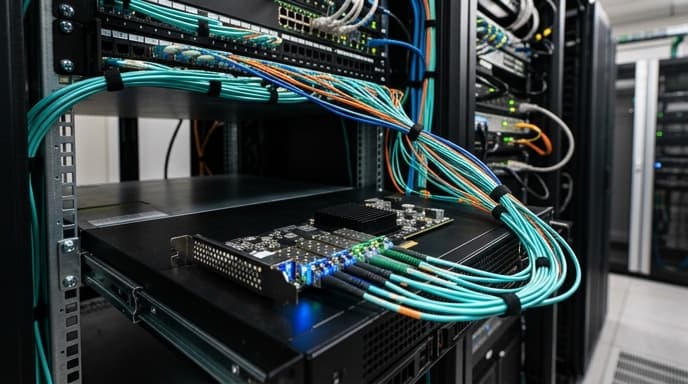
- Hardware Timestamping NICs: Network cards that record timestamps the moment an electrical or optical pulse arrives at the port, bypassing the host CPU.
Calculating Path Delays Down to the Nanosecond
PTP reaches sub-microsecond precision through continuous four-point hardware timestamp exchanges between master and client clocks. The protocol logs the departure time (t1), arrival time (t2), return departure time (t3), and client receipt time (t4).
Using these timestamps along with switch transit delays, the client network card calculates transit latency and clock offset, tuning its onboard oscillator to match the exchange matching engine.
Regulatory Mandates and Fair Market Access
Hardware timekeeping is also an explicit regulatory requirement. Under Europe's MiFID II (RTS 25), trading venues and market participants must synchronize clocks to Coordinated Universal Time (UTC) within strict maximum drift limits—down to 100 microseconds or lower depending on system latency profiles.
These hardware timestamps provide an auditable sequence of events, allowing regulators to analyze rapid market events, investigate manipulation, and verify that retail limit orders are processed in the correct order.
FAQ
What physical hardware is required to run PTP?
PTP requires network cards with PHY-layer hardware timestamping, network switches that support boundary or transparent clock modes, and a PTP Grandmaster clock connected to GNSS satellite antennas.
How does temperature affect financial server clocks?
Temperature shifts cause quartz crystals to expand and contract, altering their oscillation frequencies and causing clocks to drift. Trading systems use Temperature-Compensated (TCXO) or Oven-Controlled (OCXO) oscillators to maintain frequency stability.
Can PTP prevent market front-running?
PTP gives trading venues a verifiable record of when every order, cancel, and trade packet reached the network interface. This lets matching engines process transactions based on true physical arrival times.
Key Takeaways
- NTP software synchronization drifts too far for high-speed trading environments.
- PTP (IEEE 1588) timestamps packets at the physical network layer, avoiding OS scheduling delays.
- Atomic grandmaster clocks linked to GNSS satellites provide the UTC time reference.
- Boundary switches measure internal packet dwell times to correct network transmission delays.
- Financial regulations like MiFID II require sub-microsecond synchronization for trading records.
Related Reading
- Low-Latency Network Interfaces: How Solarflare and NIC Hardware Shape Market Execution
- How Algorithmic Execution Orders Work in Modern Trading Terminals
- Liquid Cooling in Exchange Colocation: The Infrastructure Race Behind Low-Latency Execution