
A bad night's sleep can undermine the entire purpose of a trip, whether it's for business or pleasure. Hotel rooms, with their unfamiliar beds, blinking electronics, and unpredictable noises, can be hostile environments for quality rest. The key to overcoming this is to stop being a passive guest and start actively engineering your environment for sleep.
By systematically addressing the three main pillars of a good sleep environment—light, sound, and temperature—you can transform almost any hotel room into a personal sleep sanctuary. Follow this checklist as soon as you check in.
Step 1: Create Absolute Darkness
Light is the most powerful signal to your brain that it's time to be awake. Even small amounts of light from electronics or gaps in the curtains can disrupt your sleep architecture, pulling you out of deep sleep.
- Seal the Curtains: Most hotel blackout curtains have a persistent gap in the middle where they meet. Find a pants hanger with clips in the closet and use it to clip the two sides of the curtain together, creating a perfect seal.
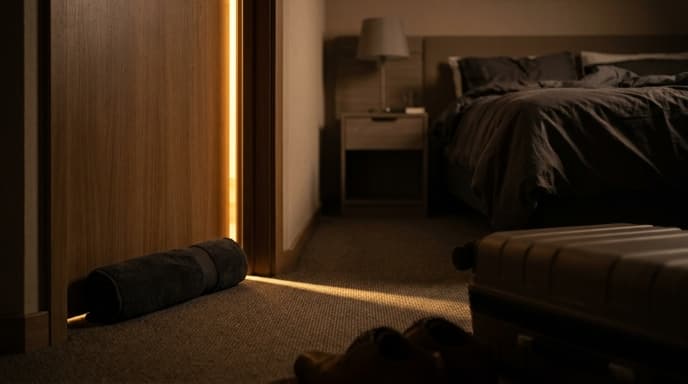
- Block Under-Door Light: A bright hallway can send a slice of light under your door all night. Roll up a bath towel and wedge it firmly against the bottom of the door to block it.
- Cover Every Blinking Light: Scan the room for any electronic lights. The TV, the alarm clock, the smoke detector, and charging bricks are common culprits. Use small pieces of painter's tape (which won't leave residue) or even a sock or piece of clothing to cover them completely. Unplug what you can.
Step 2: Control the Soundscape
Unfamiliar sounds—an ice machine down the hall, an elevator dinging, noisy neighbors—can prevent you from falling asleep or wake you up during the night. The goal is not to eliminate sound, but to create a consistent, predictable soundscape.
- Use White Noise: This is the most effective tool for masking disruptive sounds. You can use a white noise app on your phone. Alternatively, the constant hum of the room's air conditioner fan can work just as well. Set the fan to 'on' instead of 'auto' so it runs continuously through the night.
- Pack Earplugs: For maximum protection, a simple pair of foam earplugs is a traveler's best friend. They are cheap, tiny, and incredibly effective at blocking out a wide range of noises.
Step 3: Set a Cool Temperature
Your body's core temperature naturally drops as you fall asleep. A cool room facilitates this process, leading to better, deeper sleep. Hotel thermostats can be finicky, so it's worth taking a moment to get it right.
- Aim for Cool, Not Cold: A room temperature in the range of 65-68°F (18-20°C) is often considered ideal for sleep. Find the thermostat as soon as you get in the room and set it.
- Check the Vents: Make sure the air vents aren't blowing directly onto the bed, which can be uncomfortable. If they are, see if you can redirect the airflow.
Step 4: Stick to Your Pre-Sleep Routine
Your brain thrives on routine. As much as possible, replicate your at-home wind-down routine. This signals to your body that it's time to prepare for sleep, regardless of your location. If you normally read a book, stretch, or listen to calming music, do it in your hotel room, too. Avoid scrolling on your phone in bed, as the blue light can interfere with melatonin production.
Frequently Asked Questions
What if the bed or pillows are uncomfortable?
This is a tough one to fix completely. You can call the front desk and ask if they have different types of pillows (e.g., foam instead of feather). If the mattress is too firm, you can sometimes use a spare duvet or blanket from the closet as a makeshift mattress topper.
I'm worried I won't hear my alarm if I use earplugs.
This is a common concern. Set your phone alarm to vibrate and place it on the nightstand or even on the bed next to your pillow. The vibration is often enough to wake you without the loud noise.
Does it really matter if the smoke detector light is blinking?
It might seem small, but your brain is highly sensitive to light, even when your eyes are closed. For some people, these tiny flashes can be enough to disrupt sleep patterns. Since it's so easy to cover, it's a worthwhile step.
Key Takeaways
- Systematically control the three main factors of your sleep environment: light, sound, and temperature.
- Create total darkness by clipping curtains shut, blocking light from under the door, and covering all electronic lights.
- Mask unpredictable noises by using a white noise app on your phone or setting the room's fan to run continuously.
- Set the thermostat to a cool temperature, typically between 65-68°F (18-20°C), to promote better sleep.
- Maintain your regular pre-sleep routine as much as possible to signal to your body that it's time to rest.
Related Reading
- Readiness Scores Explained: The Science Behind Whoop and Oura's Daily Numbers
- What Your Resting Heart Rate (RHR) Reveals About Your Recovery
- Advanced Sleep Metrics to Structure Your Training