
You've probably heard that you should drink water on a plane, but most people drastically underestimate how dehydrating air travel really is. The humidity inside an airplane cabin is typically very low, often under 20%, which is drier than the Sahara Desert. This environment actively pulls moisture from your body every time you breathe, leading to headaches, fatigue, dry skin, and worsening the effects of jet lag.
Fighting this requires a proactive approach. You can't just chug a bottle of water on the plane and call it good. This simple, three-phase protocol ensures you stay ahead of dehydration, so you can step off the plane feeling energized instead of exhausted.
Phase 1: Pre-Flight (The 24 Hours Before)
Your hydration strategy should start a full day before you head to the airport. Going into your flight already well-hydrated is the most important step.
- Increase Your Water Intake: In the 24 hours leading up to your flight, make a conscious effort to drink more water than you normally would. Keep a water bottle with you and sip consistently throughout the day.
- Add Electrolytes: Consider adding an electrolyte powder or tablet to your water the morning of your flight. Electrolytes like sodium and potassium help your body absorb and retain water more effectively.
- Pack an Empty Bottle: Make sure a reusable water bottle is in your carry-on. It must be empty to get through security, but it's your most important tool once you're at the gate.
Phase 2: In-Flight (Gate to Gate)
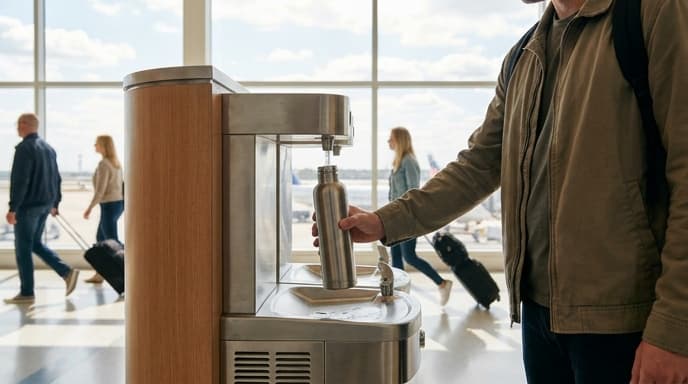
As soon as you get through security, find a water fountain and fill your bottle. Your goal now is consistent, steady intake.
- The One-Hour Rule: A good rule of thumb is to drink about 8 ounces (a standard glass) of water for every hour you are in the air. For a 4-hour flight, that means finishing a standard 32-ounce water bottle.
- Accept Every Offer: When the flight attendants come by with the beverage cart, always say yes to water, even if you still have some in your bottle.
- Avoid Dehydrating Drinks: This is crucial. Alcohol and caffeine are diuretics, meaning they cause your body to lose more fluid. While a coffee or a glass of wine might be tempting, they are working against your hydration goals. If you do have one, be sure to drink an extra glass of water to compensate.
Phase 3: Post-Flight (The First Few Hours After Landing)
You've landed, but your job isn't done. Rehydrating after you get off the plane is key to a quick recovery.
- Drink a Full Bottle Immediately: Before you even leave the airport, drink another 16-20 ounces of water.
- Continue Sipping: For the next several hours, continue to drink water steadily. This will help combat any residual dehydration and can significantly reduce the groggy feeling of jet lag.
Frequently Asked Questions
Does it matter what kind of water I drink?
For the most part, no. Plain water is perfectly fine. The most important factor is quantity. If you want to add an electrolyte packet to your water bottle during or after the flight, that can be beneficial, but it's not strictly necessary.
Is it annoying to have to get up to use the restroom so often?
It can be, but it's a positive sign that you are staying properly hydrated. Choosing an aisle seat can make this much less disruptive to you and your neighbors.
Can't I just use moisturizer for my dry skin?
Moisturizer helps with the symptoms, but it doesn't solve the root problem. True hydration comes from the inside out. Drinking enough water will benefit your skin, your energy levels, and your overall well-being.
Key Takeaways
- Start hydrating 24 hours before your flight, not just on the plane.
- Bring an empty reusable water bottle through security and fill it at the gate.
- Aim to drink about 8 ounces (one glass) of water for every hour of flight time.
- Avoid or limit alcohol and caffeine, as they are diuretics and contribute to dehydration.
- Continue to rehydrate for several hours after you land to aid recovery and reduce jet lag.
Related Reading
- A Step-by-Step Protocol for Beating Jet Lag Before It Starts
- Eating Healthy While Traveling: A Simple Framework
- What Your Resting Heart Rate (RHR) Reveals About Your Recovery