
A long travel day can wreak havoc on your body. The combination of inactivity, dehydration, and limited food choices often leaves you arriving at your destination feeling bloated, exhausted, and off your game. However, with a little strategic planning, you can use nutrient timing for travel to feel energized and in control.
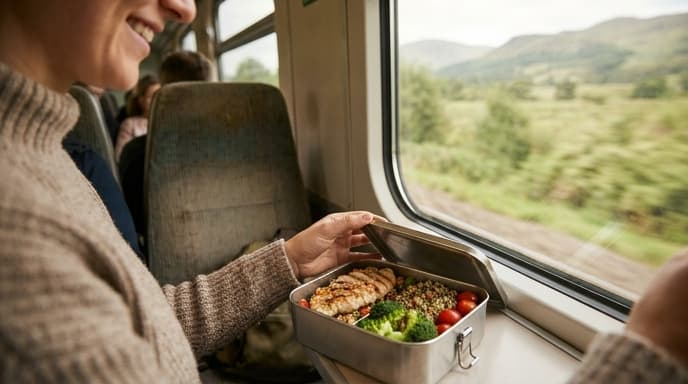
The goal is simple: keep your blood sugar stable, your digestion calm, and your body hydrated. This isn't about a complex diet; it's about making smart choices at three key moments: before you leave, during your journey, and right after you arrive.
The Pre-Travel Meal (2-3 Hours Before Departure)
Your last meal before heading to the airport or getting in the car sets the stage for the entire day. The wrong meal can leave you feeling sluggish or hungry too soon. The right meal provides sustained energy.
- What to aim for: A balanced meal with lean protein, healthy fats, complex carbohydrates, and fiber.
- Why it works: This combination digests slowly, providing a steady release of energy and promoting satiety so you aren't tempted by airport junk food.
- Good examples: Scrambled eggs with avocado and whole-wheat toast; a grilled chicken salad with quinoa; or a bowl of oatmeal with nuts and berries.
In-Transit Snacking (During the Journey)
This is where most travel nutrition plans fall apart. The key is to be prepared. Pack your own snacks, or know exactly what to look for in the airport or at a rest stop. Focus on foods that are easy to digest and not overly processed.
- What to aim for: Snacks high in protein and fiber. And most importantly, water.
- Why it works: Protein and fiber keep you full and prevent energy crashes. Hydration is critical, as the air in plane cabins is extremely dry and can lead to fatigue and headaches.
- Good examples: Almonds, walnuts, or pistachios; beef jerky; a high-quality protein bar; an apple or banana; Greek yogurt. Carry a reusable water bottle and fill it up after you pass through security.
The Arrival Meal (First Meal at Your Destination)
You've arrived, but your nutritional work isn't done. Your first meal at your destination helps anchor your body to the new environment and refuel you after a long day.
- What to aim for: A light, balanced, and easily digestible meal. Avoid heavy, greasy, or oversized portions.
- Why it works: Your digestive system may be sluggish after a day of sitting. A large, heavy meal can be difficult to process and may interfere with sleep, especially if you've crossed time zones.
- Good examples: A piece of baked or grilled fish with steamed vegetables; a simple chicken and vegetable soup; or a salad with a source of lean protein.
FAQ: Travel Day Nutrition
Should I fast while traveling?
Intermittent fasting can be a useful tool, especially for managing jet lag. Forgoing food on a flight and eating your first meal upon arrival can help reset your circadian rhythm. However, if you're not used to fasting, it might lead to low energy or overeating later. It's best to stick with what you know works for your body.
What about alcohol?
It's best to avoid alcohol during travel. It's dehydrating, can disrupt sleep patterns, and adds empty calories. If you do choose to have a drink, make sure to consume extra water to compensate.
Is it okay to eat the airline food?
Airline meals have improved, but they are often high in sodium and preservatives. If it's a long flight and you need a meal, it's a viable option. But you'll almost always feel better if you can bring your own food or choose healthier options in the terminal beforehand.
Key Takeaways
- Eat a balanced meal of protein, fat, and complex carbs 2-3 hours before you start your journey.
- During travel, prioritize hydration and snack on high-protein, high-fiber foods like nuts, jerky, or fruit.
- Pack your own snacks and a reusable water bottle to have more control over your options.
- Make your first meal upon arrival light and easy to digest to avoid disrupting sleep and digestion.
- Avoid alcohol and overly processed foods, which can increase dehydration and fatigue.
Related Reading
- A Simple Framework for Eating Healthy While Traveling
- How to Find Healthy Food in Airports and on the Highway
- The Traveler’s Hydration Protocol: How to Feel Your Best After Flying